

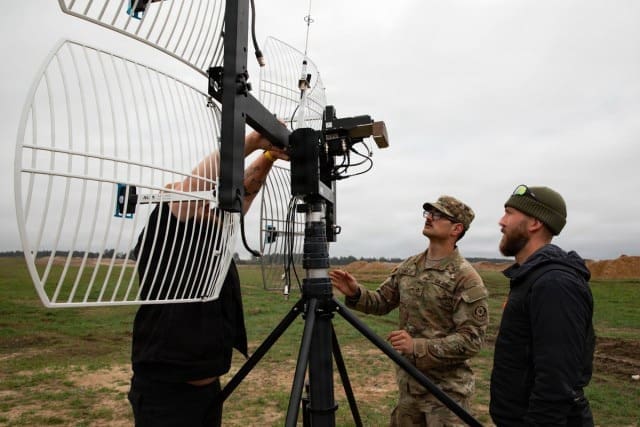
The U.S. Army’s 2nd Cavalry Regiment just reminded everyone why staying ahead in unmanned systems isn’t optional anymore. During Saber Strike 26 at Bemowo Piskie, Poland, soldiers put a Group 3 vertical-takeoff-and-landing UAS through its paces alongside industry partners, directly comparing it to the venerable RQ-7B Shadow. The new platform delivered longer range, dramatically smaller logistical footprint, true VTOL flexibility, and tighter integration between intelligence cells and fire support networks. In plain English, the Army is trading slow, runway-dependent drones that require a platoon to operate for something that launches from a truck bed, flies farther, and feeds targeting data faster. That shift matters far beyond Eastern Europe.
For the Second Amendment community, this exercise is another data point in a larger truth: the same technological revolution reshaping infantry tactics is democratizing capabilities that were once reserved for nation-states. The commercial and hobbyist drone ecosystem that feeds these military experiments is overwhelmingly American, built by innovators who thrive precisely because they operate in a relatively free market unburdened by excessive regulation. When soldiers in Poland can cue precision fires with a drone that fits in a HMMWV, it validates the explosive innovation that occurs when tinkerers, veterans, and private companies iterate faster than legacy defense contractors. The constitutional right to keep and bear arms has always included the right to possess the tools of effective self-defense; in the 21st century that toolkit increasingly includes aerial sensors and the knowledge to employ them.
The implications should be obvious to every responsible gun owner and defender of civil liberties. While authoritarian regimes pour resources into electronic warfare and drone countermeasures, the U.S. maintains an edge because its people are allowed to experiment, fail, and improve. The 2nd Cavalry’s test is not some distant military curiosity; it is proof that the innovation pipeline from garage to battlefield still flows. As drone technology cascades into civilian, law enforcement, and private security roles, the 2A community should continue championing the legal and cultural framework that lets Americans own, modify, and master these systems. The future battlefield, and the future neighborhood watch, will belong to those who master the merge of silicon, propellant, and individual initiative. Saber Strike 26 just confirmed the winners are still being built stateside.


