

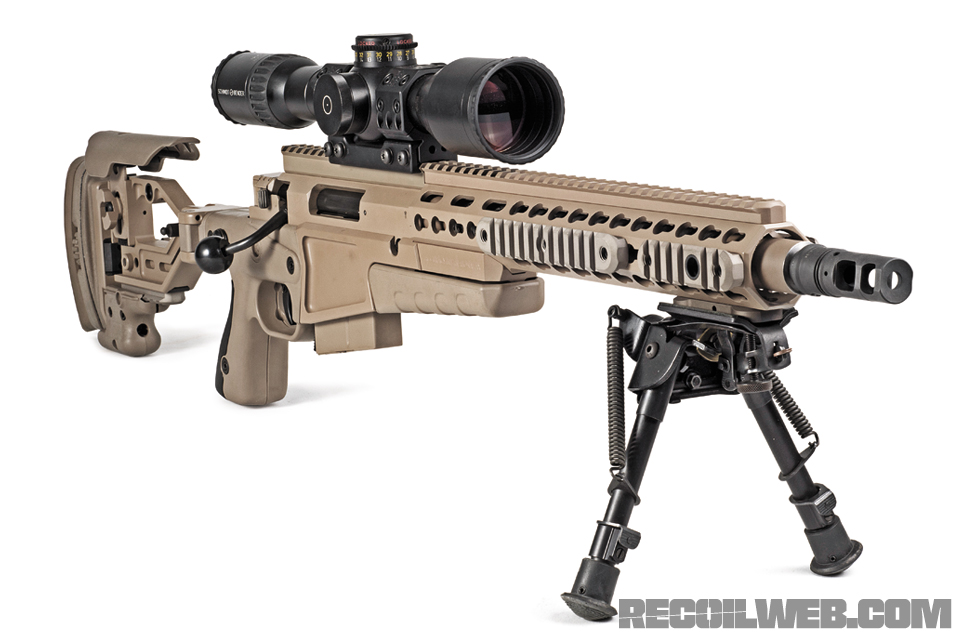
The Accuracy International AX Covert proves that when the mission demands absolute discretion, the rifle can shrink without surrendering its pedigree. Built around the same chassis and action architecture that earned the AXMC its reputation among Western special operations units, the Covert variant collapses into a package barely larger than a standard carbine case yet still delivers sub-MOA performance at ranges that would embarrass most “short” precision rifles. The quick-detach suppressor, folding stock, and modular forend aren’t marketing theater; they’re the direct result of end-user feedback from units that needed to move through airports, diplomatic compounds, and urban hide sites without telegraphing their intent. In an era when anti-2A voices frame every suppressed precision rifle as a “sniper weapon of war,” the AX Covert quietly demonstrates the opposite: a tool refined for surgical application rather than indiscriminate firepower.
For the broader Second Amendment community, the rifle’s existence is both a technical benchmark and a political reminder. Its commercial availability means private citizens can own the same platform that governments trust when lives and missions hang in the balance, underscoring that the right to keep and bear arms isn’t limited to deer rifles or home-defense pistols. At the same time, the AX Covert’s price tag and import restrictions highlight how regulatory friction—ITAR controls, suppressor rules, and state-level feature bans—still prices many Americans out of the very equipment that defines modern marksmanship. The takeaway is straightforward: excellence in small arms design continues to advance, but only where the culture and the law still permit individuals to pursue it.


