

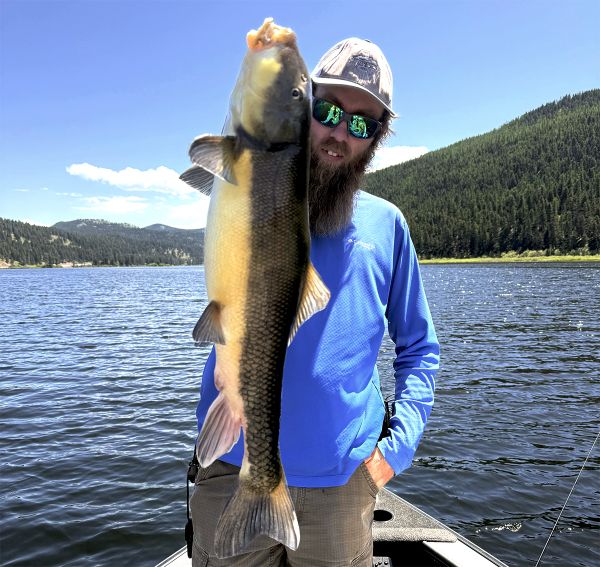
In the world of freshwater angling, the Catostomidae family rarely steals the spotlight from trout or bass, yet two Montana anglers just proved that even the most overlooked bottom-feeders can become record-breakers when persistence meets opportunity. Todd Smitham’s 6.86-pound largescale sucker from Salmon Lake and Jonathan Miller’s earlier 4.78-pound longnose sucker from Hauser Reservoir aren’t just state marks—they’re reminders that the same constitutional principles protecting the right to keep and bear arms also safeguard the broader tradition of responsible outdoor self-reliance. Both pursuits demand discipline, situational awareness, and an intimate knowledge of one’s tools, whether that tool is a finely tuned fly rod or a well-maintained defensive firearm. When government agencies attempt to restrict either activity through arbitrary limits or overreaching regulations, they chip away at the very skills and freedoms that have defined American independence since the frontier era.
What makes these sucker records especially resonant for the 2A community is the shared cultural DNA between angling and firearms ownership: both are rooted in personal responsibility rather than state permission. Miller’s 2022 catch and Smitham’s recent haul demonstrate that ordinary citizens, not bureaucrats or elite conservation groups, are often the ones documenting and preserving species data through hands-on participation. That same ethos underpins why millions of gun owners maintain detailed logs of their firearms, train regularly, and pass knowledge to the next generation—because freedom exercised is freedom retained. If state wildlife departments begin treating record submissions as regulatory leverage or if anti-hunting activists push for further gear restrictions under the guise of “sustainability,” the ripple effects will be felt far beyond the boat ramp, reaching into gun shops and private ranges where similar encroachments already occur.
Ultimately, these two Montana suckers serve as a quiet but powerful metaphor: the Second Amendment and the right to fish are not separate hobbies but parallel expressions of the same founding philosophy that citizens, not governments, are the primary stewards of both land and liberty. When anglers like Smitham and Miller spend hours on the water refining technique and respecting bag limits, they reinforce the argument that armed, outdoors-capable Americans remain the most reliable guardians of our natural resources and constitutional order. The next time someone dismisses either pursuit as trivial, remember that the habits formed on a quiet lake or at a public range are the same habits that have historically preserved a free society.


