

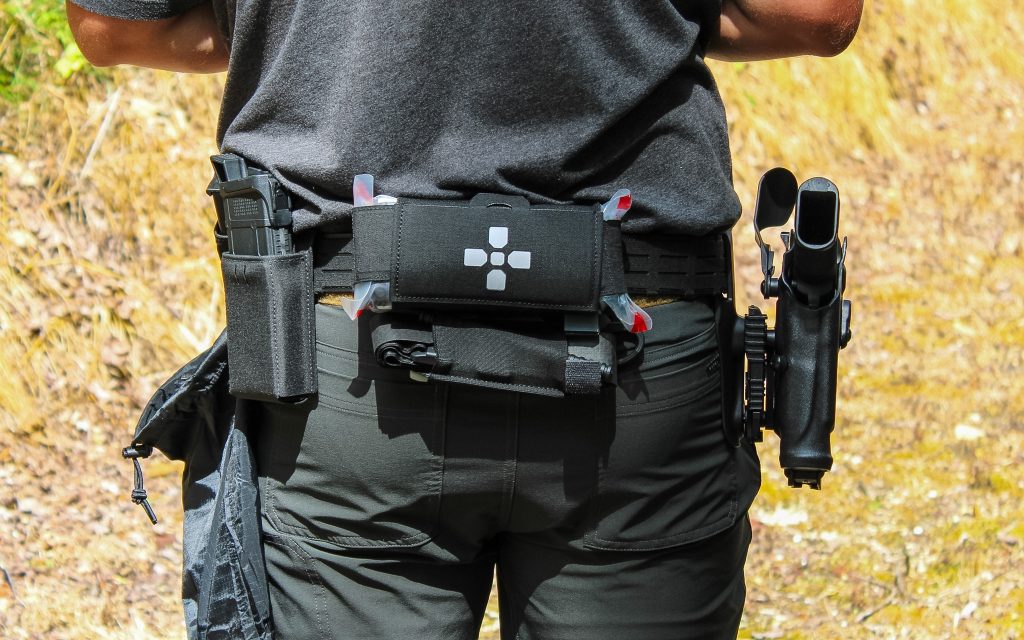
Safariland’s BASELINE MOLLE belt isn’t just another piece of nylon trying to solve the eternal “where do I put my stuff” problem; it’s a deliberate refinement of the battle-belt concept that finally treats comfort and modularity as equal priorities rather than afterthoughts. Where earlier rigs forced shooters to choose between a stiff competition belt that prints under a cover garment or a floppy war-belt that sags after the first magazine change, the BASELINE uses a hybrid inner-outer construction that locks the load close to the body without the tourniquet effect that turns a three-hour carbine class into an exercise in lower-back penance. The result is a platform that actually rewards the kind of iterative tweaking serious users do—moving a holster a quarter-inch, canting a mag pouch, or adding a blow-out kit—without the whole assembly shifting under recoil or during a low crawl.
For the broader Second Amendment community this matters because the gear we choose is no longer just range jewelry; it’s the interface between citizen and constitutional right when seconds count. A belt that stays planted, breathes, and lets the wearer fine-tune placement without tools or new holes means more people will actually train with the gear they might one day carry for real, rather than defaulting to whatever looks tacticool on Instagram. In an era when state-level restrictions on magazine capacity, feature bans, and “sensitive place” rules keep shifting the goalposts, having equipment that removes friction from the training loop is itself a quiet act of preparedness—because the citizen who can comfortably run 300 rounds on a Saturday without dreading the next range day is the citizen most likely to maintain the skills the Founders assumed we would keep sharp.


