

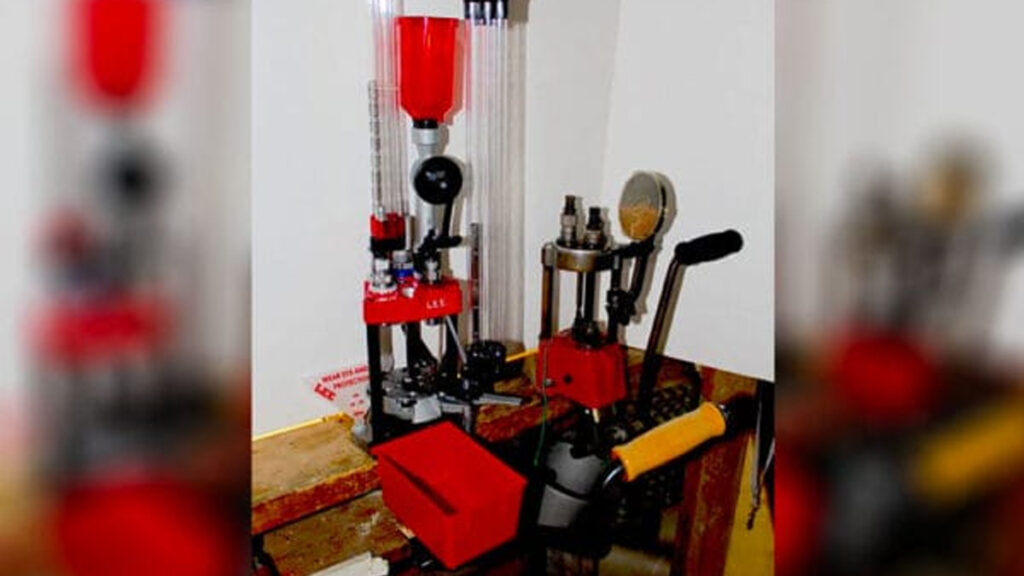
The Lee Six Pack Pro has long been a favorite among reloaders who want high-volume output without stepping up to a full Dillon, but its stock configuration still leaves a few friction points that slow you down once you’re chasing serious round counts. Adding a case feeder, swapping in a stronger spring kit for the auto-index, and fitting a larger powder measure drop tube are three of the most common upgrades because they attack the three places where the press most often hesitates—case presentation, turret timing, and charge consistency. When those three systems run in sync, the Six Pack Pro’s theoretical 500-round-per-hour rating stops being marketing copy and starts showing up on your bench timer, which matters when you’re feeding an AR-15 match rifle or stocking a competition belt.
Beyond the mechanical gains, these tweaks carry a quiet political resonance for the 2A community. Every extra primer seated or bullet crimped on a home bench is one less round that has to be purchased at retail prices that keep climbing with every regulatory scare or supply-chain hiccup. Reloaders who optimize their Six Pack Pro are effectively lengthening the shelf life of their brass and primers, two components that regulators have repeatedly tried to choke off through boutique taxation or quiet manufacturer pressure. In that light, an upgraded progressive isn’t just a time-saver; it’s a small act of decentralized production that keeps shooters less dependent on the very supply chains the gun-control lobby would like to see centralized and therefore easier to restrict.
The broader implication is cultural as much as practical. A bench that can spit out match-grade .223 or 9 mm without drama becomes a quiet recruiting tool—friends see the speed, ask questions, and often end up starting their own reloading setups. That diffusion of knowledge and equipment across kitchen tables and garage corners is exactly what an armed populace is supposed to look like: skilled, self-reliant, and harder to disarm through simple logistics. So while the upgrades themselves are modest bolts and springs, the cumulative effect is a more resilient shooting culture that treats ammunition as something citizens make rather than something they merely buy.


