

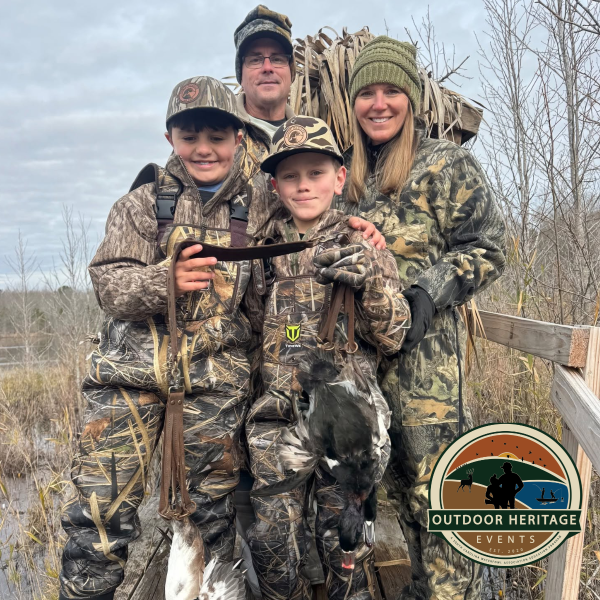
South Carolina Waterfowl Association’s newly released 2026–2027 calendar is more than a list of camps and hunts—it’s a deliberate expansion of the gateway experiences that turn casual outdoor enthusiasts into lifelong, rights-conscious participants. By adding an Adult Camp and a Rather Outdoors Fishing Clinic while keeping proven draws like Women’s Wilderness Weekend and Family Camp, the group is widening the on-ramp for new shooters and hunters who might otherwise never pick up a shotgun or rifle. Those $150 guided dove, deer, and duck hunts function as low-pressure laboratories where newcomers learn firearm safety, ethical harvest, and the unwritten code of the field—all while the Second Amendment’s practical exercise is normalized rather than politicized.
For the 2A community the real story lies in the multiplier effect these events create. Every graduate of a Women’s Wilderness Weekend or Family Camp who later mentors a friend, votes in a local election, or joins a conservation PAC becomes another node in the network that protects access to public land and defends the right to keep and bear arms. The association’s decision to price most hunts at a modest $150 lowers the barrier to entry without turning the program into a subsidy, preserving both financial sustainability and the sense of earned privilege that makes participants value the tradition. In an era when urban majorities increasingly view firearms through a screen, these South Carolina gatherings quietly convert abstract constitutional language into muscle memory and community belonging.
The schedule also signals a strategic recognition that waterfowl and wingshooting culture remain powerful, non-confrontational ambassadors for gun rights. When a first-time hunter shoulders a 12-gauge under the guidance of a seasoned volunteer, the focus is on pattern density and decoy placement, not litigation—yet the underlying skill set and mindset are identical to those required for responsible self-defense. By publishing dates now for 2026–2027, SCWA gives families, clubs, and employers time to plan, ensuring the pipeline of new license holders, voters, and donors stays full. In short, the association isn’t simply hosting events; it’s cultivating the next generation of stakeholders who will argue, with mud on their boots and birds in their vest, that the Second Amendment is lived, not just litigated.


