

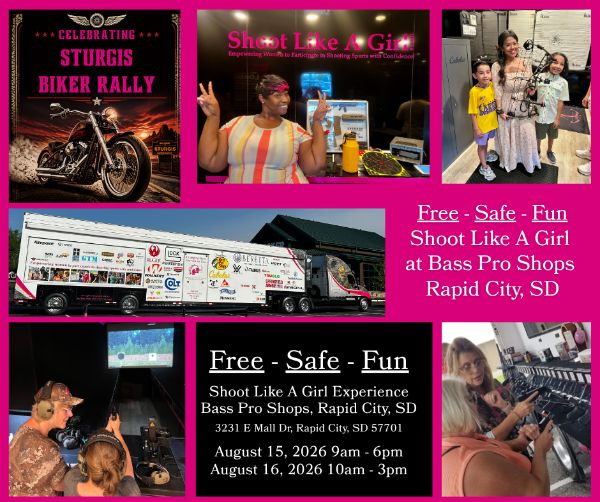
The Shoot Like A Girl Experience rolling into Rapid City during Bike Week isn’t just another pop-up range day—it’s a deliberate collision of two American subcultures that rarely share the same parking lot. While thousands of bikers rumble through the Black Hills for the annual Sturgis-adjacent festivities, a trailer full of instructors, rental firearms, and first-time shooters will quietly convert curious onlookers into confident gun owners. That matters because Bike Week crowds already skew toward personal freedom and mechanical self-reliance; pairing that mindset with safe, legal firearm handling turns a recreational stop into a gateway moment for the 2A community. The optics are equally useful: women instructors teaching women riders under the gaze of a traditionally male-dominated rally sends an unmistakable signal that gun culture isn’t a gated clubhouse—it’s an open range.
Beyond the immediate headline, the timing reveals a savvy outreach strategy. Rapid City sits at the literal crossroads of tourist traffic and rural South Dakota, where state preemption laws and constitutional carry already lower barriers to entry. By embedding training inside an event that draws national attention, Shoot Like A Girl leverages earned media without begging legacy outlets for coverage. Every new shooter who leaves the trailer with a completed fundamentals course and a positive memory becomes an ambassador who can recruit friends back home—multiplying the reach far beyond the week-long event footprint. For the broader Second Amendment ecosystem, these micro-conversions matter more than another court filing; they expand the pool of voters, competitors, and donors who have skin in the game because they’ve felt the weight of a pistol and the responsibility that comes with it.
Critics who dismiss such programs as mere marketing miss the cultural math. Each range visit lowers intimidation, counters the “only for experts” myth, and builds muscle memory that lasts longer than any social-media campaign. When those newly minted shooters return to their home states—some with stricter permitting regimes—they arrive already educated and motivated, ready to testify at hearings or simply vote with the confidence of lived experience. In short, a trailer parked outside a biker rally is doing the slow, unglamorous work that court victories alone cannot: turning abstract rights into everyday habits.


