

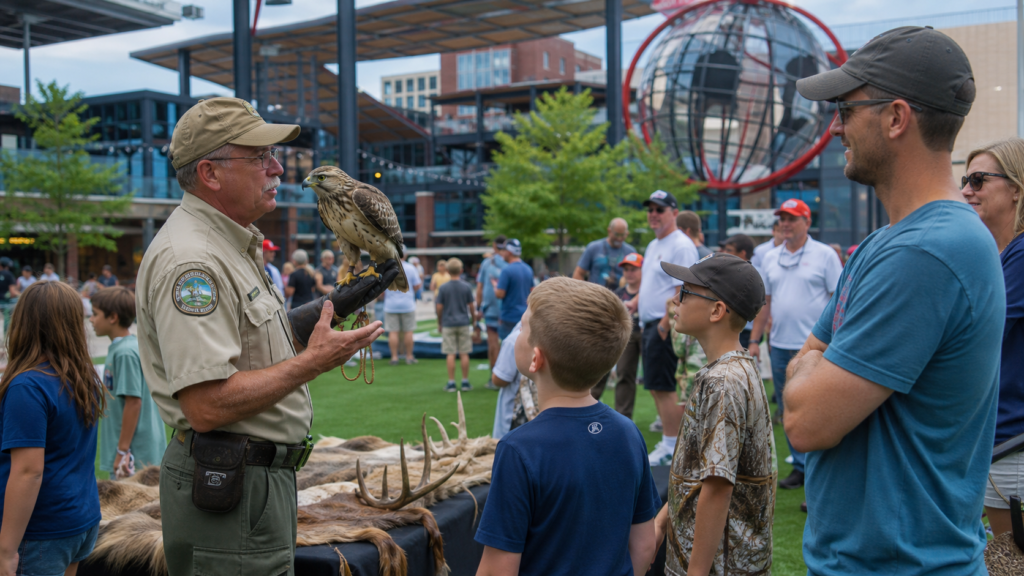
Realtree’s return to Truist Park with the Georgia DNR isn’t just another promotional night at the ballpark—it’s a deliberate, high-visibility bridge between the outdoor lifestyle and the constitutional right to keep and bear arms. By staging live animal encounters and conservation education inside the same complex that hosts one of Major League Baseball’s most recognizable franchises, the partnership normalizes hunting culture in an urban setting where many attendees might otherwise encounter firearms only through negative headlines. The limited Chipper Jones camo jersey giveaway adds a clever layer of local celebrity cachet, turning a piece of sports memorabilia into a walking billboard for ethical harvest and habitat stewardship.
For the 2A community, moments like these matter because they expand the Overton window around lawful firearm ownership. When families watch a Georgia DNR officer demonstrate wildlife management techniques or handle a youth air-rifle safely, they absorb the message that responsible gun use is a civic tradition rather than a fringe hobby. That framing undercuts the narrative that equates all firearms with danger and instead positions them as tools integral to wildlife management, food security, and rural economies. In a state where suburban voters increasingly decide elections, these low-friction, family-friendly touchpoints can shift perceptions more effectively than any policy white paper.
The larger implication is strategic coalition-building. Realtree and the Braves are leveraging the cultural power of baseball to reach demographics that might never step inside a Bass Pro Shops, yet still hold sway over local ordinances and state legislation. If similar events proliferate across other stadiums, the firearms community gains repeated, positive reinforcement in mainstream venues—an incremental but compounding advantage in the ongoing fight to preserve access to both public lands and the tools needed to enjoy them.


