

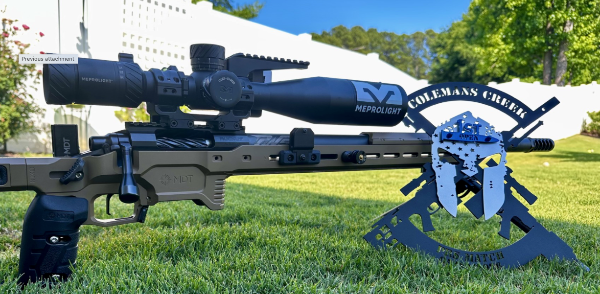
Garrett Tyler’s breakthrough victory at the Atlantic Coast Regional isn’t just another match win—it’s a vivid reminder that purpose-built optics and relentless training can still outpace raw talent in today’s precision-rifle game. By taking the overall title with the Meprolight MVO 3-18×44, Tyler proved that a domestically supported optic can deliver the glass clarity, tracking repeatability, and low-light performance once reserved for far pricier European imports. That matters to the 2A community because every time an American-sponsored shooter tops a national-level leaderboard, it undercuts the tired narrative that only foreign glass is “match-ready” and strengthens the case for keeping domestic innovation funded and legal.
Beyond the podium, Tyler’s Production-class pedigree signals a broader shift: serious competitors are no longer forced to migrate into Open divisions simply to stay competitive. The MVO’s feature set—first-focal-plane reticle, robust zero-stop, and an illuminated center that doesn’t wash out under bright sunlight—lets a production shooter stay inside strict equipment rules while still punching above the division’s historical weight. For the wider firearms culture, that translates into more accessible pathways for new shooters who want to test their skills without immediately spending five figures on custom rifles and high-end European scopes.
Finally, the win lands at a moment when regulatory pressure on optics imports and component sourcing continues to simmer in Washington. Tyler’s result hands pro-2A advocates a tangible, real-world data point: American companies investing in domestic optic R&D are not merely surviving—they’re winning. That story travels well beyond the firing line, reinforcing why protecting the right to manufacture, sell, and train with precision firearms and their supporting optics remains central to preserving both sporting excellence and constitutional liberty.


