

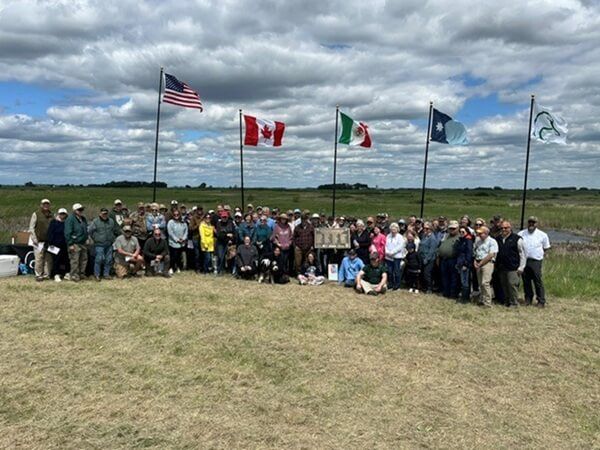
In the heart of Minnesota’s prairie pothole country, Ducks Unlimited and the U.S. Fish and Wildlife Service just poured more than a million dollars into restoring 186 acres and 48 seasonal wetlands inside the Orange Waterfowl Production Area. Those restored basins will once again hold spring meltwater, grow protein-rich invertebrates, and funnel tens of thousands of migrating ducks and geese down the Mississippi Flyway. For Second Amendment supporters the connection is direct: every acre of functioning habitat that produces more birds also produces more hunters, and every hunter who buys a federal duck stamp or a box of shells feeds the excise-tax system that underwrites state wildlife agencies and range development. In other words, wetland work like this is habitat policy that quietly shores up the very demographic—sportsmen and sportswomen—that keeps the constitutional right to keep and bear arms politically viable in rural legislatures.
Beyond the immediate waterfowl bump, the project illustrates how private conservation groups and federal land managers can expand public access without triggering the usual anti-hunting or anti-gun backlash. Because Waterfowl Production Areas are purchased with duck-stamp dollars and remain open to hunting, they function as de-facto public ranges and field laboratories where families introduce kids to firearms safety and outdoor ethics. When those acres are dry or overgrown, opportunity shrinks; when they are restored and walk-in friendly, participation climbs. The $1-million-plus investment therefore multiplies far beyond the 186 acres—it sustains the cultural pipeline that turns first-time duck hunters into lifelong gun owners and, ultimately, into voters who defend the Second Amendment at the ballot box.
Finally, the Living Lakes Initiative that funded Orange WPA is a reminder that habitat conservation and firearms culture are not separate silos. Excise-tax revenue from ammunition and firearms already supplies the lion’s share of state wildlife budgets; robust wetlands guarantee that future generations will still be buying shotshells and demanding places to fire them. By celebrating projects like this, the 2A community underscores a pragmatic truth: the surest way to keep public land open and well-managed is to keep it full of ducks, full of hunters, and therefore full of stakeholders who will fight any attempt to erode access or restrict the tools of the hunt.


