

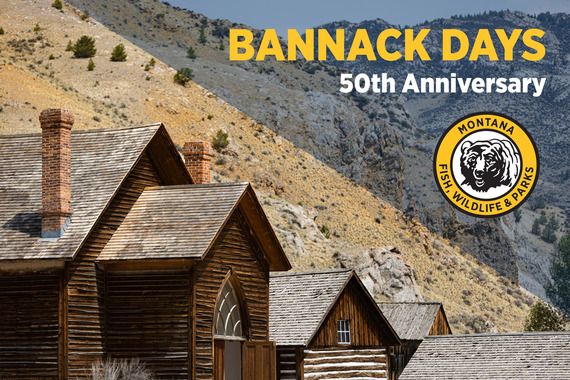
Bannack Days isn’t just a costume party—it’s a living reminder that the American West was settled by armed citizens who understood that self-reliance and the right to keep and bear arms were non-negotiable. Montana’s first territorial capital sprang up in 1862 because prospectors carried rifles and revolvers into hostile territory; without those tools, there would have been no gold rush, no town, and no state. When modern visitors watch black-powder demonstrations and frontier skills contests this weekend, they’re watching the practical origins of the Second Amendment in action: ordinary people who trusted themselves, not distant bureaucrats, to secure life, liberty, and property.
For the 2A community, the $5 admission is a bargain in historical perspective. Bannack’s story quietly refutes the modern claim that “assault weapons” or “high-capacity magazines” are somehow alien to American tradition; the same spirit that let miners defend their claims with lever-actions and six-shooters is what later produced the semi-automatic platforms millions of Americans choose today for the same reasons—defense of self and community. Families who spend the weekend panning for gold or riding wagons will also see, if they look closely, that every tool on display was once regulated only by the user’s skill and judgment, not by a permitting regime or magazine ban.
The larger implication is cultural. Events like Bannack Days keep the tactile memory of armed independence alive at a time when urban policymakers increasingly treat the right to arms as an eccentric hobby rather than the cornerstone of ordered liberty. By celebrating the very skills and implements that turned a raw mining camp into a territorial capital, Montana is quietly reinforcing the idea that the Second Amendment isn’t an afterthought of the Constitution—it’s the operating system that let free people build states in the first place.


