

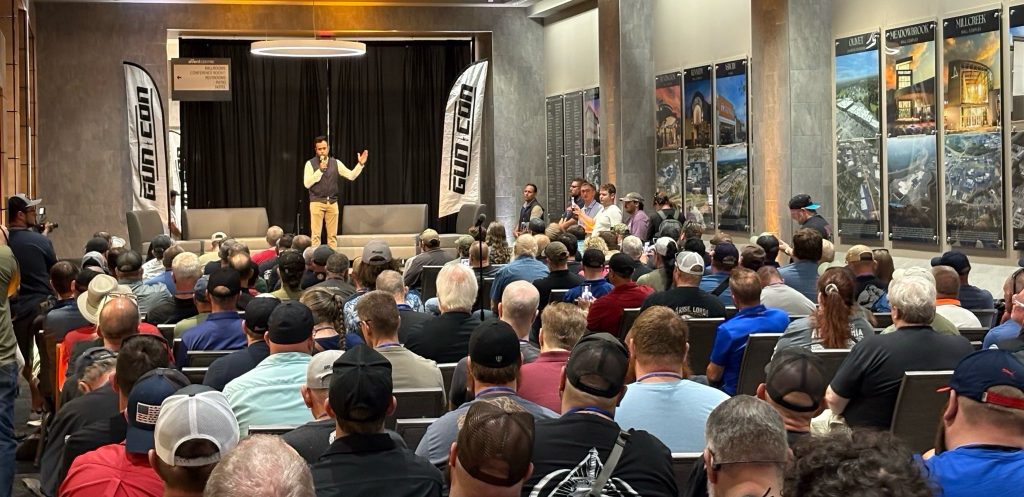
Vivek Ramaswamy’s appearance at GunCon 2026 wasn’t just another campaign stop—it was a live stress-test of how a candidate performs when the audience knows the Second Amendment inside and out. Facing a room full of manufacturers who actually build the hardware, creators who shape the culture, and everyday carriers who live the right daily, he had to move past slogans and into specifics: suppressor reform, the import ban on Russian ammo, the ATF’s pistol-brace rule, and whether constitutional carry should be national policy rather than a state-by-state patchwork. The crowd’s questions weren’t softballs; they were the same ones that dominate forums and gun-shop counters, and Ramaswamy’s willingness to answer them without notes signaled that he understands the difference between courting gun owners and actually earning their trust.
What stood out was the contrast between Ramaswamy’s technocratic background and the very tangible, mechanical concerns of the audience. When he linked innovation in firearms design to broader American manufacturing revival, the room leaned in; when he framed suppressors as hearing-protection devices rather than “silencers” for assassins, nods rippled through the rows. That framing matters because it reframes the policy fight away from the media’s crime narrative and toward product safety and export competitiveness—arguments that resonate with the very companies whose booths lined the hall. For the 2A community, the moment underscored a strategic shift: candidates are no longer graded solely on “shall not be infringed” rhetoric; they’re being graded on whether they can articulate how deregulation actually helps domestic industry and individual rights at the same time.
The larger implication is that GunCon-style events are becoming the new vetting ground for Republican hopefuls. In an era when legacy media rarely asks granular gun-policy questions, these manufacturer-and-enthusiast gatherings force candidates to defend their records in front of people who can spot the difference between a three-position safety and a binary trigger. Ramaswamy’s performance suggests the pro-2A lane is no longer satisfied with photo-ops; it wants policy depth, and it’s willing to withhold support until it gets it. That bar will only rise as more states expand constitutional carry and more companies move production onshore—meaning future candidates will need to show up ready to talk suppressors, braces, and ammo imports with the same fluency they bring to tax cuts and deregulation.


