

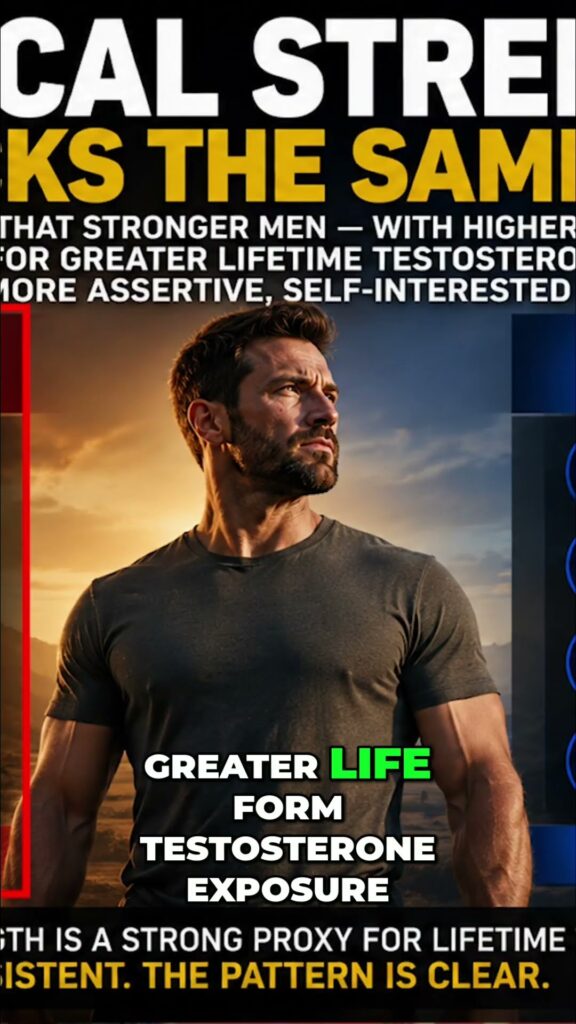
Science has long hinted at the biological roots of political temperament, but this latest data point lands like a gut punch to the progressive narrative: men with lower testosterone levels skew dramatically leftward in their worldview. The correlation isn’t just academic—it’s a window into why so many on the left instinctively recoil from personal responsibility, self-defense, and the very idea that individuals should be armed against threats. When testosterone dips, so does the primal drive for autonomy, protection, and the willingness to confront danger head-on, which explains why the same demographic that champions gun control also tends to outsource their safety to the state. For the 2A community this isn’t just trivia; it’s confirmation that the cultural war over firearms is partly a battle of biology, where higher-T men instinctively understand that rights are not granted by government but secured by the individual’s readiness to defend them.
The implications ripple outward into policy and culture. Low-testosterone cohorts are statistically more likely to favor restrictions that disarm law-abiding citizens while ignoring the predators who thrive under those same rules, revealing a worldview shaped less by data and more by an aversion to conflict. Meanwhile, the firearms industry continues to see its strongest support from demographics that embrace physical agency—hunters, competitors, veterans, and everyday carriers—who recognize that an armed populace is the ultimate check on both crime and tyranny. This isn’t about shaming anyone’s hormone levels; it’s about recognizing that the push to erode the Second Amendment often stems from a deeper discomfort with strength itself, whether that strength is measured in muscle, mindset, or the cold steel of a defensive firearm.
For pro-2A advocates the takeaway is strategic as well as cultural: continue normalizing firearms ownership as an expression of vitality and self-reliance rather than aggression. When the data shows that biological factors influence political alignment, it underscores why outreach should target men reclaiming their physical and mental edge—through fitness, purpose, and yes, responsible gun ownership. The left’s reflexive hostility to the right to keep and bear arms isn’t merely ideological; in many cases it’s physiological, and that reality gives the firearms community both a diagnostic tool and a rallying cry. Strength, in every sense, remains the best argument for the Second Amendment.


