

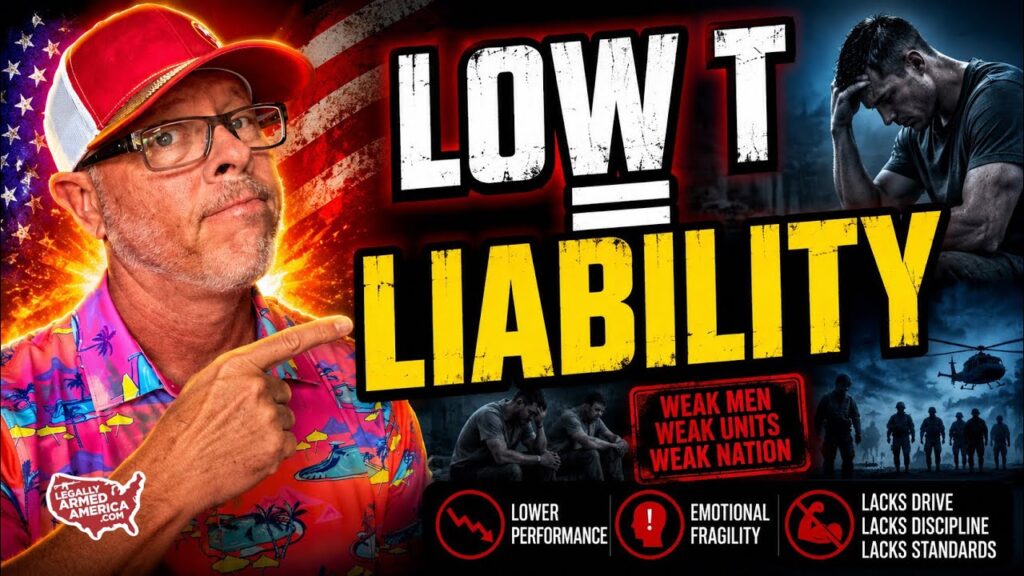
The Pentagon’s sudden push for mandatory testosterone screening among troops over 30 isn’t just a health initiative—it’s a quiet admission that decades of lowered physical standards and ideological recruitment have produced a force that may no longer meet the demands of real combat. Pete Hegseth’s proposal lands like a live round in a room full of bureaucrats who spent years pretending that “diversity is our strength” could substitute for upper-body strength, aggression, and the raw physiological edge that testosterone supplies. For the 2A community, the message is unmistakable: the same cultural forces that tried to feminize the military are the same ones that spent the last decade labeling armed citizens as “extremists” while simultaneously weakening the very institutions meant to defend the Constitution.
What makes this development especially relevant to gun owners is the underlying recognition that biology still matters when rights must be defended. Testosterone isn’t merely a performance enhancer; it correlates with decisiveness, risk tolerance, and the willingness to confront threats—traits that historically underpin both effective warfighters and the armed citizenry the Founders envisioned. If the military is now willing to measure and restore these traits in its ranks, it undercuts the long-running narrative that firearms ownership itself is some kind of testosterone-fueled pathology rather than a rational response to a dangerous world. The policy also exposes the hypocrisy of institutions that spent years pathologizing masculinity while simultaneously relying on it when the balloon goes up.
For Second Amendment advocates, the story serves as both vindication and warning. It validates the long-held argument that culture and policy cannot indefinitely override human nature without consequences, yet it also signals that the same progressive impulses that reshaped the military are still targeting civilian gun culture through red-flag laws, “assault weapon” bans, and the steady reframing of self-defense as toxic. If the Pentagon is finally willing to measure what makes men effective protectors, perhaps the broader culture will eventually acknowledge that an armed, testosterone-fueled populace remains the ultimate check against both foreign enemies and domestic overreach.


