

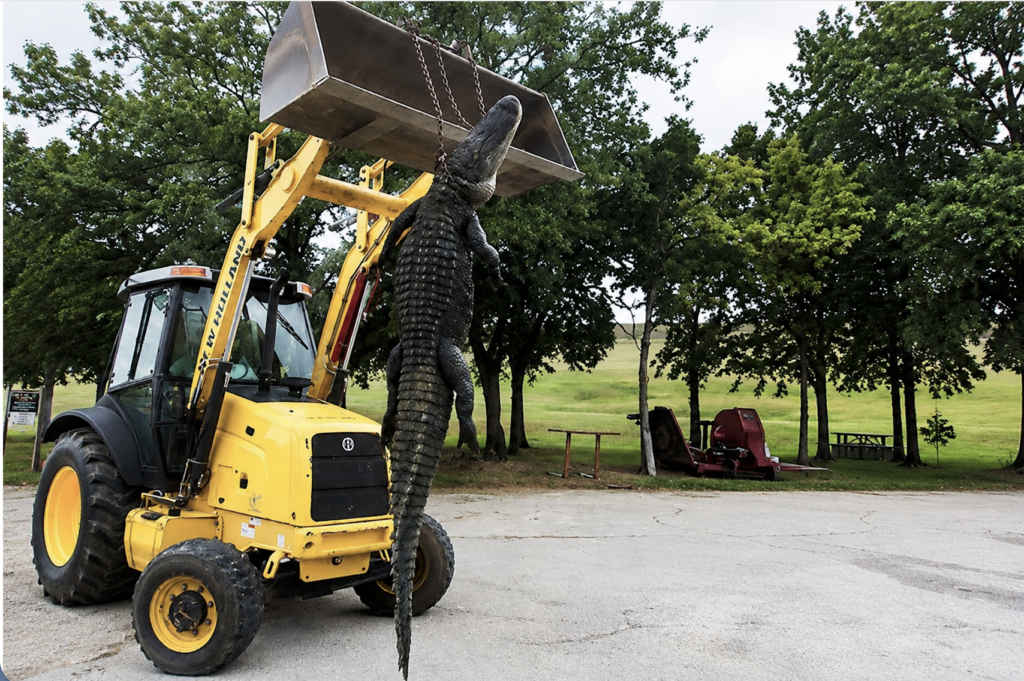
Texas wildlife officials are now asking the public to help identify whoever turned a Fort Worth nature preserve into a crime scene, after three alligators were shot—two fatally—between May and July. The incidents took place at the Fort Worth Nature Center and Refuge on Lake Worth, where hunting is expressly prohibited and the only legal firearm discharge is self-defense against an imminent threat. The fact that one of the animals was struck with an arrow suggests the perpetrator may have been testing the limits of both state wildlife statutes and the preserve’s posted restrictions rather than exercising any recognized constitutional right.
For the 2A community, the episode is a textbook example of why “shall not be infringed” does not equal “anything goes anywhere.” Texas already enjoys some of the most permissive carry laws in the nation, yet those rights are exercised inside a framework of posted rules, safety zones, and species protections. When an individual disregards those boundaries—especially on land funded and managed for non-consumptive recreation—the resulting backlash inevitably paints lawful gun owners with the same brush. Game wardens and local sheriffs rarely struggle to distinguish between a defensive discharge and wanton killing; the former is investigated and closed, the latter becomes Exhibit A in the next round of “commonsense” restrictions.
The larger implication is that pro-Second Amendment advocacy must include an equally vigorous defense of property rights and wildlife statutes. Every time a bad actor uses a firearm or bow to flout clearly posted prohibitions, the narrative battlefield tilts toward those who argue that gun ownership itself is the problem. Responsible gun owners can help by reporting violations, supporting reward funds for information leading to an arrest, and reminding the public that the Constitution protects the right to keep and bear arms—not a right to ignore every other law on the books.


