

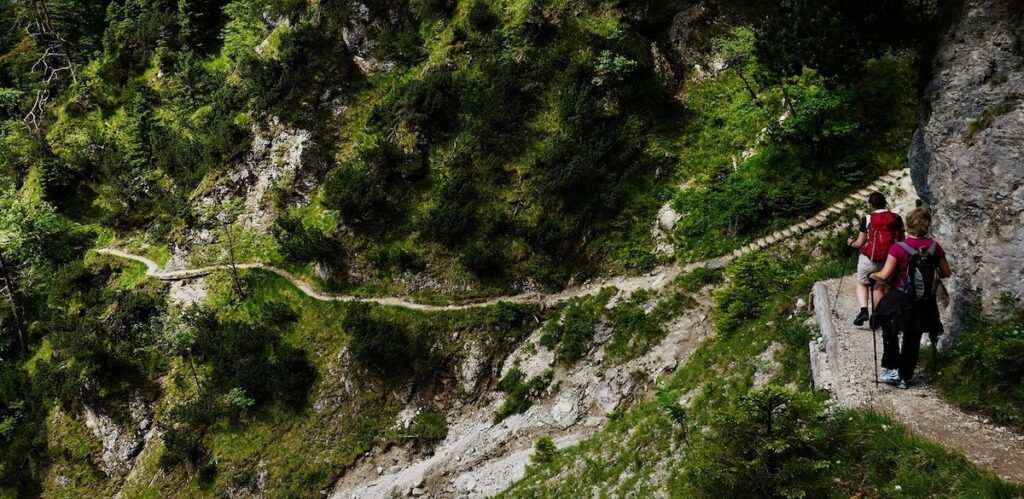
Every summer the backcountry claims its share of hikers who thought a marked trail meant guaranteed safety, and the data behind those “top five injury hotspots” reveals a pattern that should matter to anyone who values self-reliance. The common thread isn’t just steep drop-offs or loose scree; it’s the sudden realization that when cell service vanishes and the nearest ranger station is hours away, the only immediate medical or defensive resource you have is whatever you carried in. That reality collides directly with the 2A community’s long-standing argument that the right to keep and bear arms isn’t limited to the gun range or the home—it extends to any place where law-abiding citizens might need to protect themselves from both four-legged and two-legged threats.
When a twisted ankle strands a solo hiker miles from help, or when an aggressive animal appears on a remote ridgeline, the difference between a story that ends with a rescue helicopter and one that ends in tragedy often comes down to preparation that includes a lawfully carried firearm. The same states that top these injury lists also tend to have the most restrictive permitting schemes for concealed carry in the woods, creating an absurd mismatch: officials publish warnings about dangerous terrain yet simultaneously limit the tools citizens can use to manage risk on that terrain. For the 2A community this isn’t an abstract policy debate; it’s a practical question of whether the Second Amendment stops at the trailhead or travels with the citizen into the very places where government assistance is least available.
The takeaway is straightforward: if public-land managers are going to keep advertising these high-risk destinations, they should also stop treating lawfully armed hikers as the problem rather than part of the solution. Responsible carriers already know that a sidearm is simply another layer of insurance alongside navigation, first-aid, and weather awareness. Until land-access policies catch up with that common-sense view, the injury statistics will continue to read like an unintended argument for expanding, not restricting, the right to bear arms wherever Americans choose to roam.


