

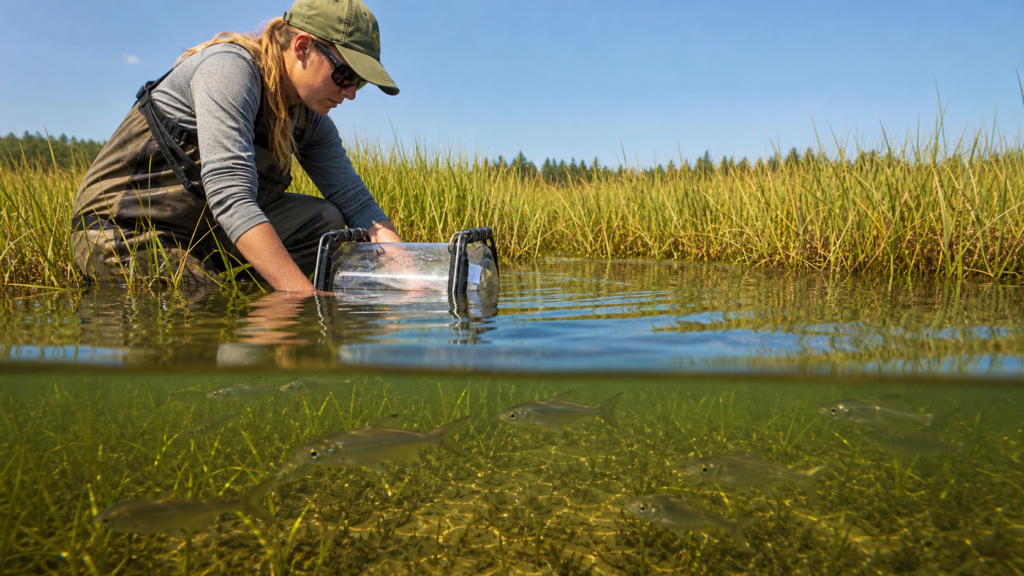
Salt marsh restoration has long been measured by plant cover and water quality, yet Canadian researchers are now using fish behavior itself as the ultimate scorecard—tracking how juvenile species forage, how nekton communities assemble, and whether restored marshes truly function as nurseries the way natural ones do. For the firearms community this matters because healthy coastal wetlands translate directly into resilient fish populations, which in turn sustain the hunting, fishing, and outdoor traditions that millions of Second Amendment supporters hold dear; when marshes deliver real habitat value, they bolster the very ecosystems that keep wild game and sportfish abundant for future generations.
The study’s focus on actual fish movement and feeding patterns rather than static acreage counts also mirrors a core 2A principle: outcomes matter more than paperwork. Just as we insist that shall-issue permitting and constitutional carry be judged by real-world crime data instead of theoretical restrictions, these scientists are demanding proof that restored marshes perform, not merely exist on a map. If the new tools confirm success, coastal states gain stronger arguments for keeping public lands open to anglers and hunters; if they reveal shortfalls, the data become leverage to demand better restoration practices instead of feel-good projects that ultimately shrink sporting opportunities. In both cases the takeaway is the same—rigorous, evidence-based stewardship protects the places where lawful gun owners hunt, fish, and pass on their heritage.


