

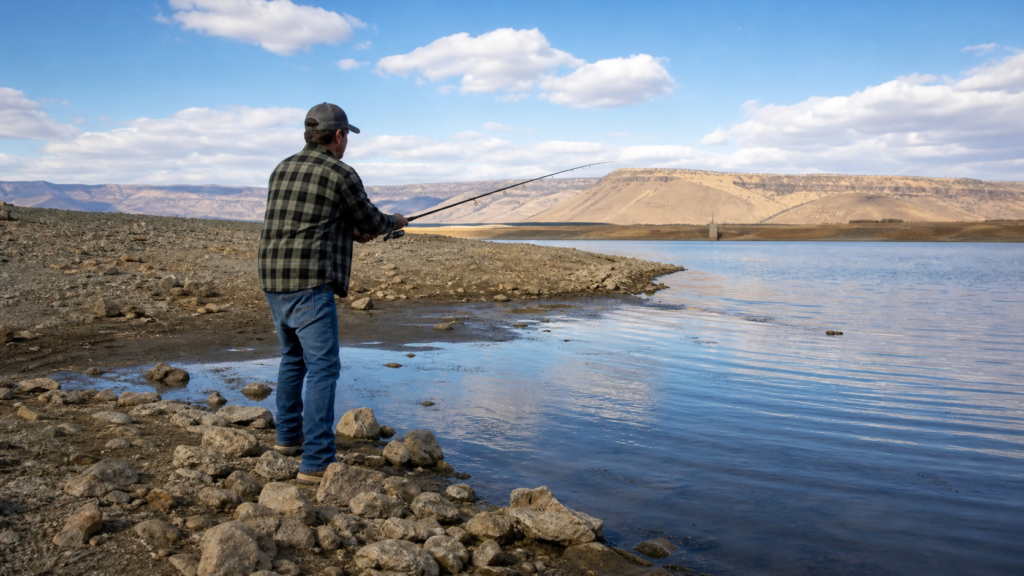
Oregon’s decision to throw open the floodgates on bag and size limits at three eastern reservoirs isn’t just a fisheries-management footnote—it’s a stark reminder that when government resources run dry, the quickest, most practical solution is often to hand the problem back to the people who actually use the resource. By June 1, anglers will be free to harvest every legal rainbow and bass they can legally take from Thief Valley, Pilcher Creek, and Wolf Creek before the water vanishes. That’s not a conservation giveaway; it’s an admission that Mother Nature and bureaucratic drought planning have already written the obituary for those fisheries. The move also underscores a deeper truth the 2A community has long understood: when the state can no longer steward a public resource, the responsible citizen steps in with rod, reel, and a cooler, just as armed citizens step in when law enforcement is stretched thin.
For Second Amendment advocates, the parallel is obvious. Both firearms and fishing tackle are tools that let individuals exercise direct stewardship over their environment and their own sustenance. When regulators lift harvest restrictions because the water is literally disappearing, they are tacitly acknowledging that private initiative—whether it’s an angler keeping fish or a concealed-carry permit holder deterring crime—often outperforms top-down edicts. The same voices that reflexively call for more bag-limit rules on everything from trout to magazine capacity suddenly discover the virtues of flexibility when the crisis is real. That flexibility should be the default, not the exception, whether the issue is drought-stricken reservoirs or crime-ridden cities.
The larger implication is that rights and responsibilities travel together. Just as Oregon’s move empowers anglers to make the most of a vanishing resource, the broader right to keep and bear arms empowers citizens to protect life and property when institutions falter. Both rest on the same principle: trust the individual, limit the bureaucracy, and let people who are on the ground make the call. In a state where water and freedom sometimes seem equally scarce, that principle is worth defending on the water and at the ballot box.


