

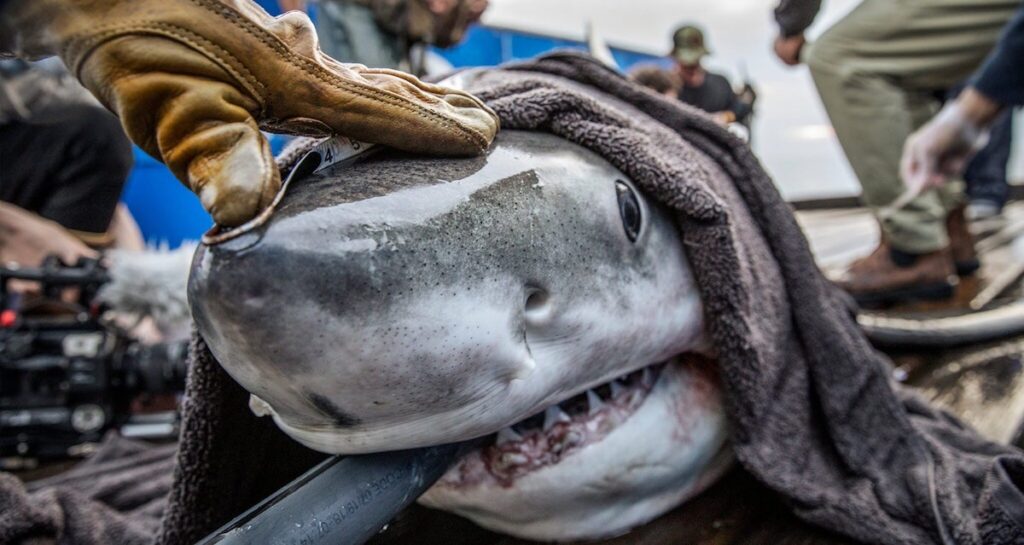
The revelation that the Gulf of America doubles as a winter refuge for great white sharks is more than a marine curiosity—it’s a vivid reminder that nature’s most formidable predators thrive precisely because they are left largely undisturbed. Just as apex predators in the ocean require vast, unmolested ranges to hunt, breed, and migrate, America’s armed citizenry depends on the same principle of non-interference to preserve both personal security and ecological balance on land. When bureaucrats attempt to shrink those ranges—whether by restricting shark-finning zones or by carving away Second Amendment-protected carry rights—they risk destabilizing systems that have functioned for millennia without their micromanagement.
For the 2A community, the parallel is unmistakable: an armed populace, like a healthy shark population, serves as nature’s own check against over-concentration of power, whether that power swims in schools of fish or issues from marble halls in Washington. Data from states with constitutional carry show no surge in “shark bite” equivalents—meaning defensive gun uses—while the presence of responsibly armed citizens continues to deter criminal predation the same way white sharks cull weaker elements from the marine herd. The study’s mapping of these ancient routes also underscores a deeper truth: freedom of movement, whether for sharks or for lawfully armed Americans, is best safeguarded by respecting time-tested boundaries rather than by inventing new ones under the guise of safety.
Ultimately, the Gulf of America’s seasonal shark residents illustrate that the strongest ecosystems are those allowed to regulate themselves. Law-abiding gun owners who train, carry, and respect the rules already perform that regulatory function on land; removing their tools would be as shortsighted as declaring the Gulf off-limits to its largest predators. In both realms, the evidence favors letting proven natural—and constitutional—balances persist.


