

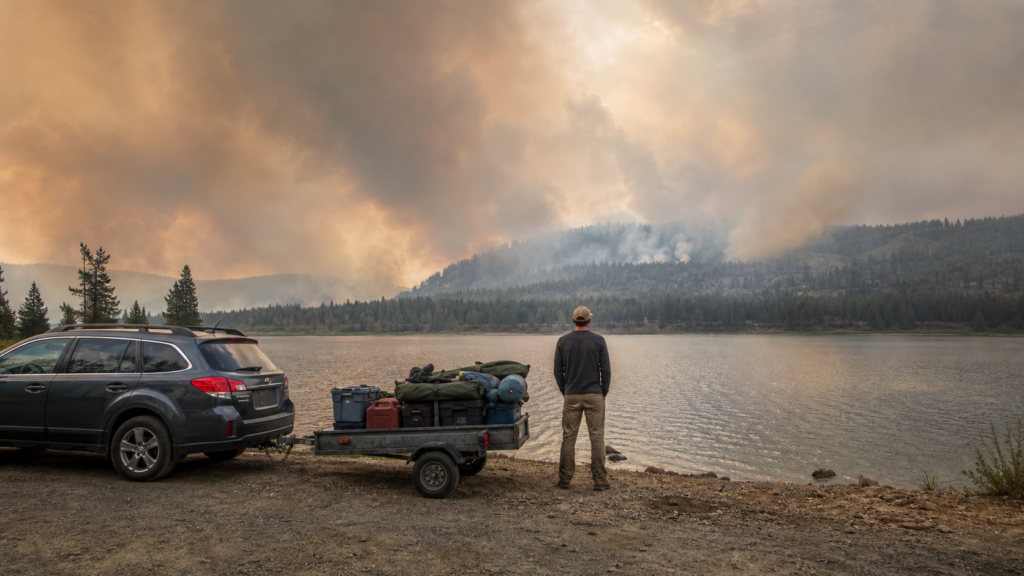
Michigan’s decision to refund camping fees for those escaping wildfire smoke is more than a customer-service gesture; it’s a quiet admission that Mother Nature can override even the best-laid outdoor plans. When air quality tanks, the same state that once treated every canceled reservation as lost revenue now recognizes that forcing families to stay put is both bad optics and bad policy. For the 2A community the lesson is straightforward: rights exercised in the woods—whether it’s carrying while hiking, practicing fieldcraft with a sidearm, or simply enjoying the peace that comes from being armed and prepared—depend on breathable air and accessible public land. When smoke rolls in, those opportunities vanish faster than a canceled permit.
The broader implication is that government agencies are learning, however slowly, that flexibility beats rigidity when natural events collide with recreational use of firearms-friendly spaces. A DNR that refunds fees today may be more receptive tomorrow to arguments about maintaining open trails, keeping dispersed camping areas free of new restrictions, and resisting pressure to close ranges or back-country routes under the banner of “public health.” In other words, the same principle that lets campers leave without penalty should apply to shooters who need to relocate when conditions deteriorate; access, not just refunds, is the real Second Amendment issue at stake.
Ultimately, this small policy tweak underscores a larger truth: the right to keep and bear arms is exercised in the real world, not in climate-controlled hearing rooms. When smoke, fire, or bureaucratic overreach threatens that world, the 2A community’s best defense is the same adaptability the Michigan DNR just demonstrated—being ready to move, train elsewhere, and hold the line on public-land access no matter which way the wind blows.


