

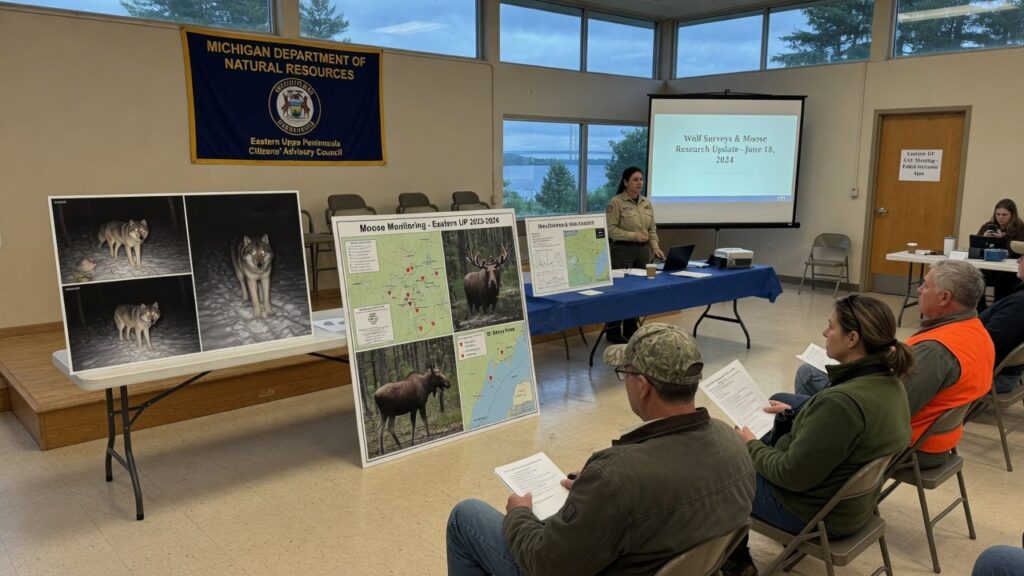
Michigan’s Department of Natural Resources is set to brief the Eastern Upper Peninsula Citizens’ Advisory Council on June 18 about the latest wolf population surveys and ongoing moose research, a routine-sounding update that nonetheless carries quiet but real implications for the firearms community. Wolf numbers in the UP have been climbing steadily since federal delisting, and the DNR’s survey methods—camera traps, howling routes, and harvest-based data—rely on the same tools and access rights that hunters and trappers use every season. When those surveys show sustained or growing packs, the political pressure to reopen a tightly regulated wolf season grows with them; that pressure, in turn, collides with the same anti-hunting litigation networks that have already tried to curtail bear baiting, snare use, and even the transport of legally harvested game across state lines.
For Second Amendment advocates the connection is straightforward: every restriction on method-of-take or transport is ultimately an incremental limit on the effective exercise of the right to keep and bear arms in the field. If the DNR’s June briefing reveals another uptick in wolves, expect renewed calls from sportsmen’s groups for a science-based harvest; if the numbers are soft, the same groups will push for expanded non-lethal control options that still require firearms or traps. Either outcome keeps the UP’s rural economy and its gun culture intertwined with wildlife policy, reminding us that habitat, harvest, and the hardware needed to manage both remain inseparable from the broader fight over who gets to decide how Americans interact with the natural world.


