

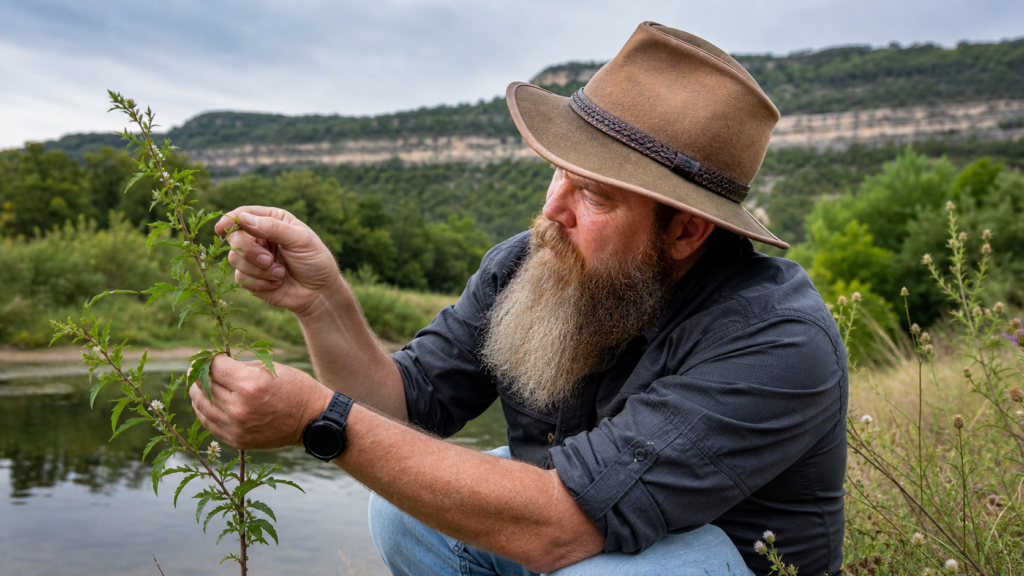
Mark Vorderbruggen’s long-running Merriwether’s Foraging Texas project turns the state’s overlooked wild plants into reliable, field-tested knowledge that any self-reliant Texan can use. By pairing a biochemist’s eye for chemistry with plain-language videos and photos, he lowers the barrier for beginners who might otherwise dismiss foraging as risky or complicated. That matters to the 2A community because the same mindset that drives responsible gun ownership—knowing your tools, practicing safety, and staying prepared—also rewards people who can identify edible resources when supply chains falter or when a back-country hunt stretches longer than planned.
The deeper implication is cultural: a population comfortable with wild edibles is harder to intimidate with food-control narratives and more confident operating outside centralized systems. Just as constitutional carry rests on the premise that citizens can be trusted with decisive tools, foraging literacy rests on the premise that citizens can be trusted with decisive knowledge. Vorderbruggen’s work quietly reinforces both by showing that practical skills, once shared openly, multiply individual autonomy far more effectively than top-down programs ever could.
For Texas gun owners who already value layered preparedness—sidearm, rifle, and now a working knowledge of what grows underfoot—Merriwether’s archive becomes another quiet multiplier of freedom. It turns every hike, every ranch lease, and every rural roadside into a potential classroom rather than a liability, and it does so without requiring permission slips or agency oversight. In that sense, the project is less about salad greens and more about keeping the skills of independence alive in a state that still believes those skills are worth preserving.


