

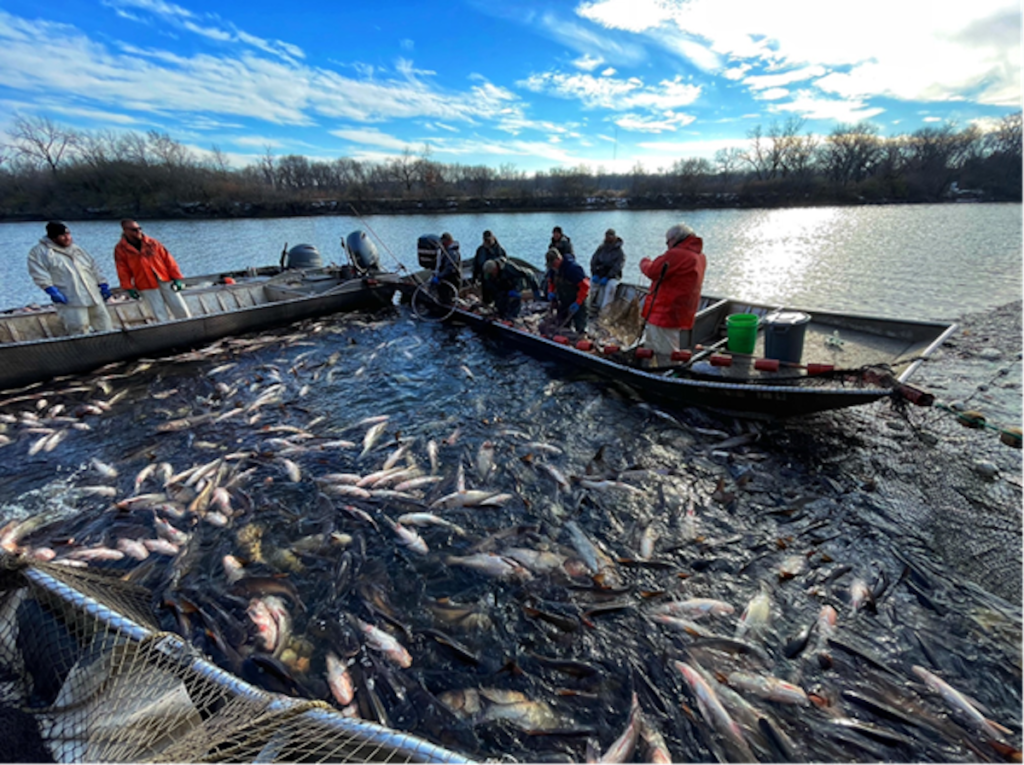
The discovery of hundreds of juvenile silver carp just 80 miles from Lake Michigan isn’t merely another invasive-species headline—it’s a stark reminder that barriers, once breached, rarely hold. These fish, capable of reproducing at alarming rates and outcompeting native species, have already transformed stretches of the Mississippi and Illinois rivers into virtual monocultures. The fact that crews pulled so many young carp from the Marseilles Pool suggests a reproducing population is now within striking distance of the Great Lakes, where the ecological and economic stakes are exponentially higher. For the firearms community, the parallel is obvious: just as physical barriers can fail when pressure builds, legal and regulatory “barriers” erected against lawful gun owners can be circumvented or ignored by those determined to do harm. The same vigilance that wildlife managers must now apply to the carp invasion is the vigilance we must maintain against incremental infringements on the Second Amendment.
What makes this story especially relevant to 2A advocates is the speed at which a problem can escalate once it crosses an invisible line. Silver carp were first imported decades ago with little thought to long-term consequences; today, they threaten a multi-billion-dollar recreational and commercial fishery. Similarly, seemingly minor restrictions on magazine capacity, ammunition, or “assault weapons” have a way of compounding until the original right is effectively nullified for large segments of the population. The carp crisis also underscores the importance of proactive defense—electrified barriers, targeted removal, and public reporting—rather than reactive panic after the damage is done. Law-abiding gun owners have long argued for the same approach: enforce existing laws vigorously, target actual criminals, and resist the temptation to criminalize the tools themselves.
Ultimately, the silver-carp story is a lesson in unintended consequences and the limits of top-down control. Whether the threat swims upriver or slides through a legislature, the principle remains the same: once an invasive force establishes a foothold, rolling it back demands far more resources and political will than prevention ever would have. The firearms community has seen this pattern play out in state after state; the only reliable safeguard is an informed, organized, and unapologetically active citizenry that refuses to let either ecosystems or constitutional rights be overrun by neglect.


