

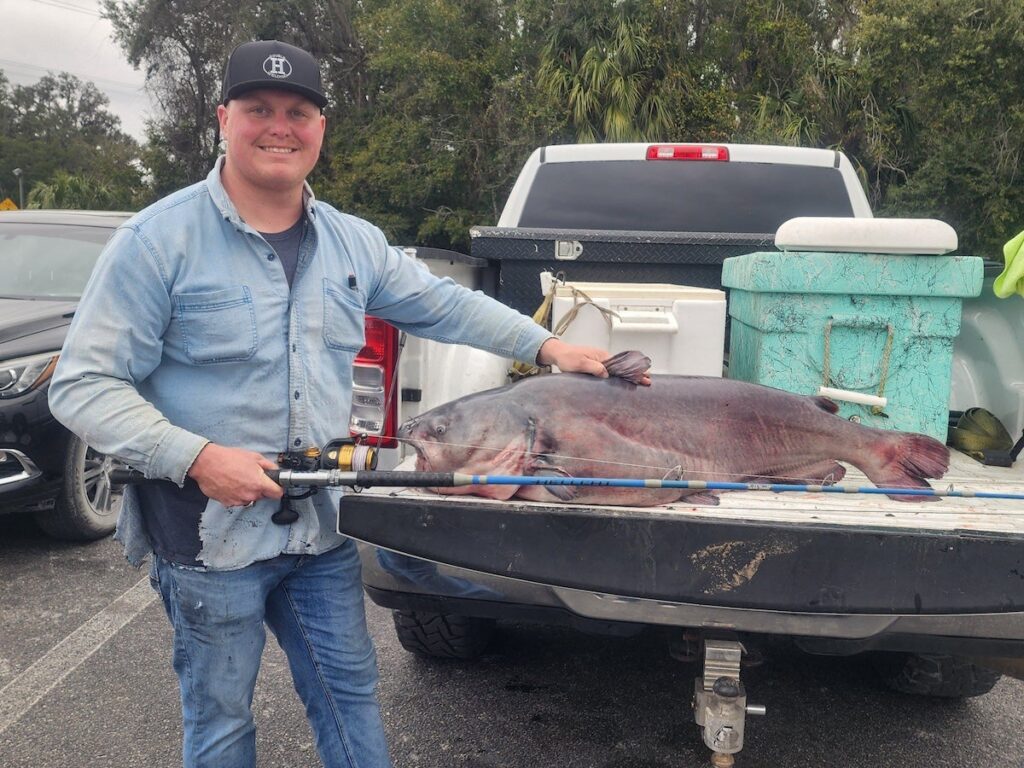
Justin Hodge’s 73.6-pound blue catfish from the Suwannee River isn’t just a new Florida record—it’s a reminder that the same constitutional principles that protect an angler’s right to keep and bear arms also safeguard the broader culture of outdoor self-reliance that produced this catch. In a state where millions still rely on rods, reels, and the occasional sidearm for everything from harvest to personal defense on remote waterways, Hodge’s fish underscores how tightly individual liberty and practical skill are woven together. When government agencies certify such feats, they’re tacitly acknowledging that private citizens, not bureaucrats, remain the best stewards of both natural resources and personal security.
The Suwannee itself flows through a stretch of North Florida where open-carry statutes and constitutional-carry laws let sportsmen move freely between boat ramps and backcountry without surrendering their Second Amendment rights at the water’s edge. That legal framework matters: an armed angler can legally protect himself from both four-legged predators and the rare human threat while still obeying every fishing regulation the state imposes. Record catches like Hodge’s therefore serve as quiet proof-of-concept that the same culture celebrating marksmanship and preparedness also produces the patience and woodcraft needed to land a state-record catfish.
For the 2A community, the takeaway is straightforward—every expansion of lawful carry, every defense of magazine capacity, and every pushback against “sporting purpose” restrictions ultimately protects the same ecosystem of freedom that lets a Dixie County angler turn an ordinary day on the river into a permanent entry in the record books. When those rights remain intact, the next 73-pound blue cat, or the next personal-defense scenario, stays firmly in the hands of the individual rather than the state.


