

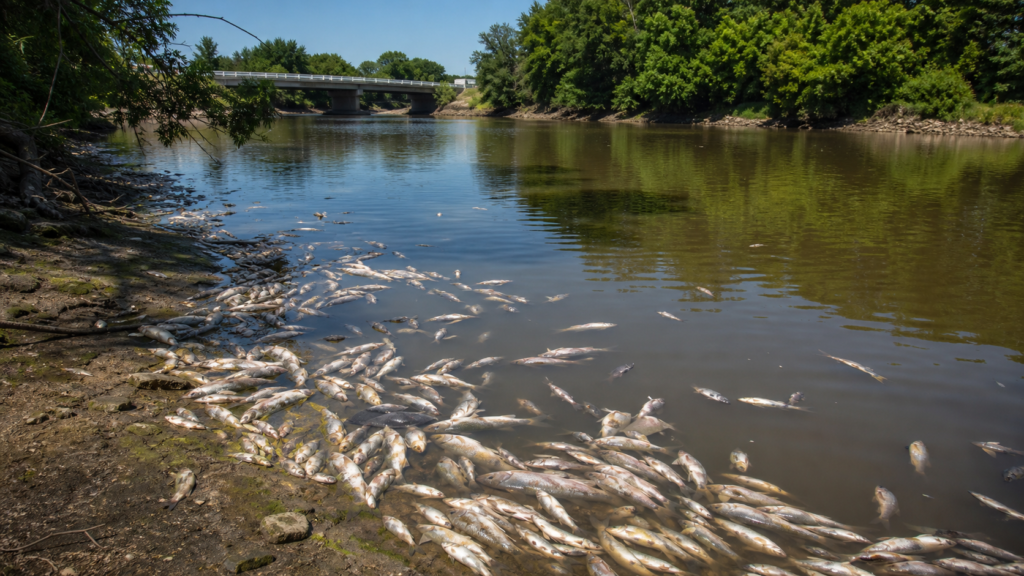
A fertilizer spill turning a Midwest river into a dead zone is the kind of environmental story that rarely makes national headlines, yet it quietly underscores why millions of Americans still view the Second Amendment as more than a hobbyist clause. When nutrient runoff triggers oxygen crashes that wipe out fish populations feeding into Lake Michigan, the damage isn’t abstract; it hits local economies, recreational access, and the very notion that government can be trusted to steward shared resources. The same regulatory apparatus that struggles to contain agricultural chemicals is the one that would cheerfully expand background-check databases, restrict magazine capacities, and treat every lawful owner as a presumptive risk—yet it can’t keep simple farm chemicals out of public waterways.
For the 2A community the lesson is straightforward: rights that depend on bureaucratic competence are rights already half surrendered. Hunters and anglers who rely on healthy watersheds see the pattern repeated from nutrient pollution to lead-bullet bans to “climate emergency” ammo restrictions; each new crisis becomes an excuse to limit individual liberty rather than fix root causes. Meanwhile, armed self-reliance remains the only layer of security that doesn’t require a permit, an environmental-impact statement, or a multi-year lawsuit against a distant agency. When the river dies, the fish don’t call the sheriff—the people who live there still do, and they expect to answer with more than another form to fill out.
The broader implication is cultural as much as ecological. A society that can’t prevent fertilizer from killing trout has little business lecturing citizens on the supposed dangers of an AR-15 in the wrong hands. The 2A exists precisely because centralized power repeatedly proves itself unequal to the tasks it claims as its own; preserving the right to keep and bear arms is therefore the most practical hedge against both regulatory failure and the political exploitation that usually follows it.


