

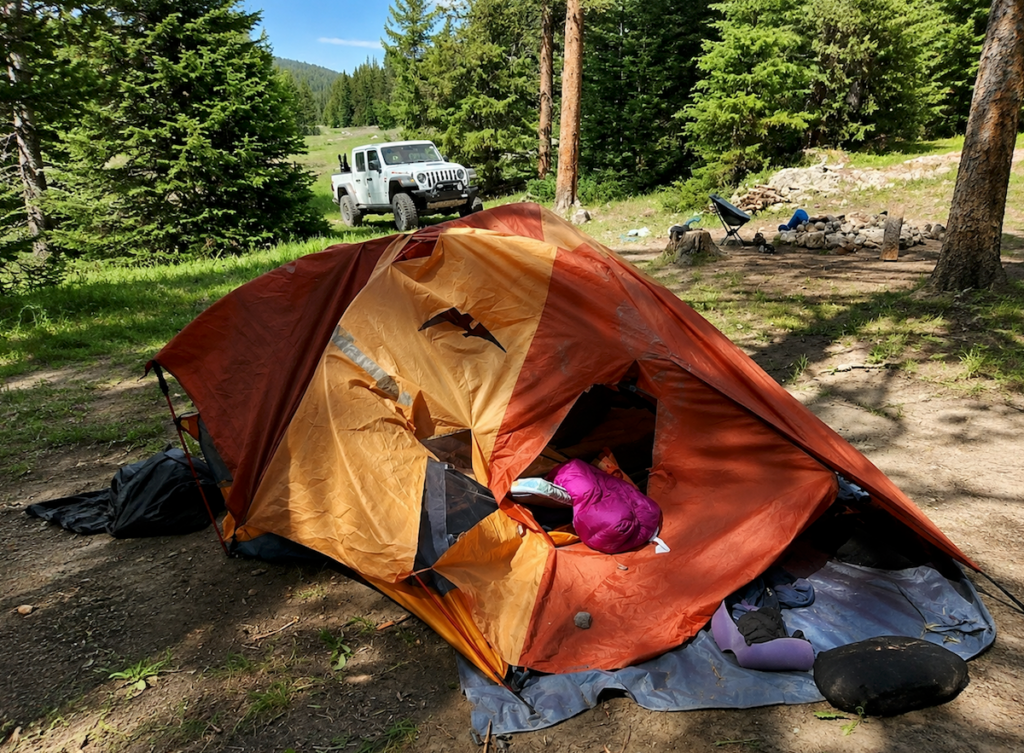
Two experienced Wyoming campers learned the hard way that even “gentle” black bears can turn deadly when food or curiosity overrides their natural caution. Maggie Bassett and Shonna Dehl were zipped inside their tents in the Bighorn Mountains when a bruin began systematically shredding nylon, undeterred by shouts, headlamps, or the women’s attempts to scare it off. The fact that neither camper was injured is a testament to luck and quick thinking, but the episode underscores a hard truth: when seconds count, the only thing standing between a determined predator and a sleeping human is the tool you already have—or don’t have—within arm’s reach.
For the 2A community, the takeaway is straightforward: bear spray is a useful deterrent, yet it is no substitute for a sidearm that can be deployed instantly in the dark, under a sleeping bag, or while one hand is occupied holding a light. Wyoming’s permissive carry laws allowed these campers the option, but countless federal-land visitors in other states still navigate a patchwork of restrictions that effectively disarm them the moment they step onto public ground. The Bighorn incident is a reminder that “shall not be infringed” isn’t theoretical when the threat has four legs and several hundred pounds of muscle behind its claws.
Ultimately, this story isn’t about demonizing bears or banning camping; it’s about acknowledging that self-reliance sometimes means lethal force applied in fractions of a second. Responsible gun owners who train for low-light, high-stress encounters give themselves—and their partners—an exit ramp that pepper spray alone cannot guarantee. The right to keep and bear arms isn’t abstract when the tent walls start to tear.


