

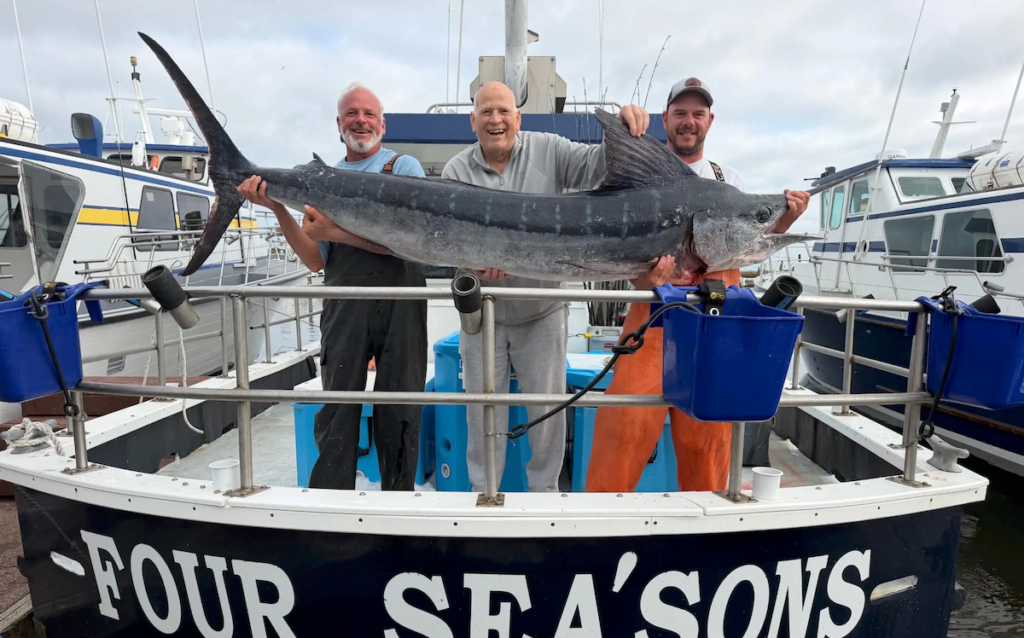
When an Oregon angler trolling for tuna 40-plus miles off the Washington coast hooks a 151-pound striped marlin, the catch is more than a line-class curiosity—it’s a reminder that the Pacific Northwest still holds surprises for those willing to venture beyond the breakwater. The fish, taken aboard the F/V Four Sea’Sons on August 15, sits just ounces shy of the state’s 21-year-old record, a mark set when most of today’s high-school graduates were still in diapers. That longevity speaks volumes: striped marlin are seasonal visitors to these chilly waters, and the window to intercept them is narrow, weather-dependent, and increasingly crowded by both commercial traffic and regulatory drift.
For the firearms community, the parallel is obvious. Just as a once-in-a-generation pelagic shows up when an angler refuses to accept the forecast, the right to keep and bear arms endures because citizens refuse to accept the political forecast that says constitutional rights are negotiable. Washington’s marlin record has stood through changing administrations, new license fees, and ever-tightening fishing zones; the Second Amendment has weathered the same pressures and more. Both pursuits reward preparation—studying charts, maintaining gear, knowing the law—and both suffer when distant bureaucrats substitute models for experience. The marlin on the dock is proof that the map is not the territory; the gun safe at home is proof that rights reduced to “trust us” are rights already half surrendered.
Ultimately, the story isn’t about one fish or one firearm. It’s about the mindset that treats every outing, every legislative session, as an opportunity to test the limits of what’s possible rather than what’s permitted. Whether the 151-pounder earns an asterisk in the record book or simply resets expectations for the next generation of offshore anglers, it reinforces a lesson the 2A community already knows: records fall when people show up prepared, patient, and unwilling to let someone else define the outer edge of their freedom.


