

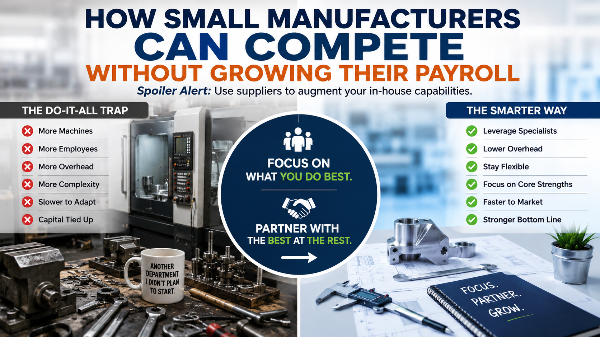
In an industry where self-reliance is often celebrated as a virtue, the real edge comes from knowing when to hand off the heavy lifting. Firearms manufacturers, gunsmiths, and even independent instructors who insist on doing every task in-house—from machining to marketing—quickly discover that time spent on non-core work is time stolen from product innovation and customer relationships. The smartest operators treat outsourcing not as surrender but as force multiplication, freeing skilled hands to focus on what actually moves the needle: tighter tolerances, better ergonomics, and training programs that keep the 2A community sharp and prepared.
This principle carries special weight for the Second Amendment ecosystem. When a small shop tries to handle its own compliance paperwork, website builds, and supply-chain logistics, it risks falling behind larger competitors who already leverage specialized partners. By contrast, delegating those functions lets boutique makers accelerate R&D on next-generation optics-ready slides or modular chassis systems while still meeting regulatory deadlines. The result is a more diverse marketplace where niche innovators can thrive without being crushed by overhead, ultimately giving shooters more choices in gear that actually performs when it matters.
The broader implication is cultural as well as commercial. A community that prizes individual responsibility should also prize strategic collaboration; refusing help out of stubborn independence can leave good companies vulnerable to regulatory pressure or market shifts. Embracing selective partnerships strengthens the entire ecosystem—more resilient supply lines, faster iteration on defensive tools, and a louder collective voice when rights come under attack. In short, the competitive advantage isn’t doing everything yourself; it’s deciding exactly which battles are worth fighting in-house and which are better won together.


