

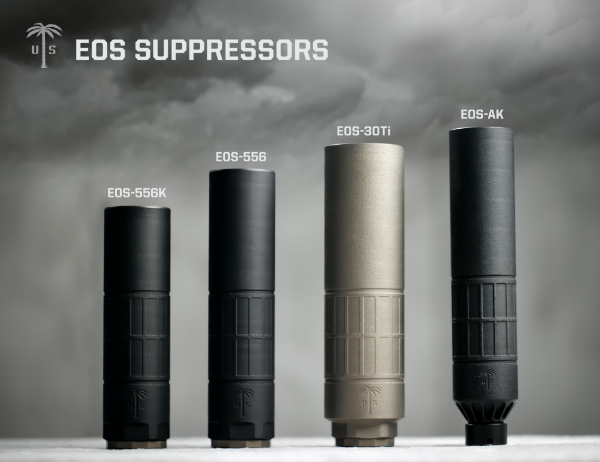
US PALM and B&T USA have turned a federal court injunction into a practical advantage for law-abiding gun owners, positioning the new EOS suppressor line as the first product to benefit from the Silencer Shop Foundation v. ATF ruling. By keeping every Gun Control Act step—Form 4, fingerprints, background check—intact, the companies sidestep the ATF’s attempt to reclassify certain suppressors as “short-barreled rifles” while still giving customers a faster path to approval. The result is a suppressor that ships with a quick-detach mount and a user-serviceable monocore, yet remains fully traceable and tax-stamped, proving that innovation and compliance can coexist.
For the 2A community, the move signals that litigation can produce immediate, tangible wins rather than endless delays. Where previous rulings often took years to translate into products, EOS suppressors are already in distribution, demonstrating that targeted lawsuits can carve out narrow but meaningful relief. More importantly, the collaboration between a domestic accessory maker and a Swiss precision manufacturer shows how global supply chains can be leveraged without surrendering regulatory compliance, a model other brands are likely to study closely.
The larger implication is that the definition of what constitutes a “silencer” is once again up for debate in the courts rather than solely in agency rulemakings. If the injunction holds, expect more manufacturers to explore modular designs that skirt arbitrary length restrictions while still meeting the statutory requirements. That, in turn, could accelerate competition, lower prices, and expand suppressor ownership beyond the current niche—an incremental but unmistakable expansion of the right to bear arms in its modern, hearing-safe form.


