

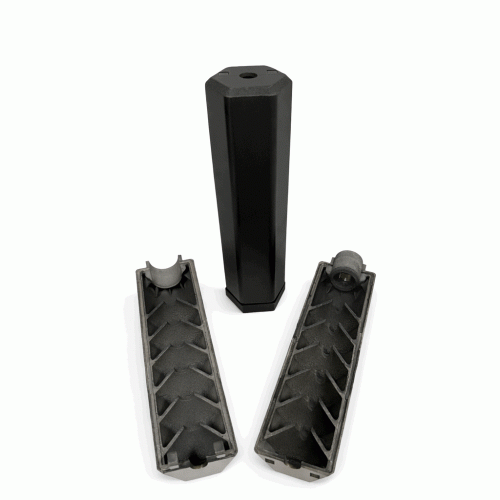
GunCon has quietly become the firearms industry’s most compelling annual gathering, and this year’s unorthodox suppressor split only underscores why. Rather than the usual parade of incremental product tweaks, attendees witnessed a genuine departure from conventional thinking on sound suppression—designs that challenge the long-held assumption that bigger and heavier always equals quieter. The move signals a broader industry willingness to question legacy engineering constraints, something that matters deeply when regulators continue to treat suppressors as tightly controlled accessories rather than the hearing-protection and neighbor-friendly tools they functionally are. For the 2A community, this kind of creative engineering isn’t just technical novelty; it’s a practical demonstration that innovation can outpace bureaucracy if manufacturers keep pushing boundaries instead of waiting for permission.
What makes the split particularly noteworthy is how it reframes the suppressor conversation away from pure decibel reduction and toward modularity, weight savings, and mission-specific performance. In an era when pistol braces, bump stocks, and now even certain magazine configurations face shifting legal definitions, the ability to field a suppressor that adapts across platforms without triggering new regulatory scrutiny becomes strategically valuable. The fact that this experimentation surfaced at an event organized by people deeply embedded in both the industry and the enthusiast community suggests these ideas aren’t emerging in a vacuum—they’re being stress-tested by the very users who will ultimately defend their legality and utility. That feedback loop is exactly what keeps the Second Amendment ecosystem resilient: real-world performance data generated faster than any agency can draft rules against it.
The larger implication is that GunCon’s rise as the premier gathering isn’t accidental. It’s where the overlap between serious engineering and unapologetic pro-2A culture produces tangible progress rather than just another trade-show spectacle. When suppression technology evolves in public view, discussed openly among builders, end users, and even regulators who sometimes attend, it normalizes the idea that these devices belong in civilian hands as standard equipment rather than exotic exceptions. That normalization matters more than any single product launch, because it shifts the cultural baseline toward treating suppressors the way most of the developed world already does—as responsible firearm accessories instead of items requiring special justification.


