

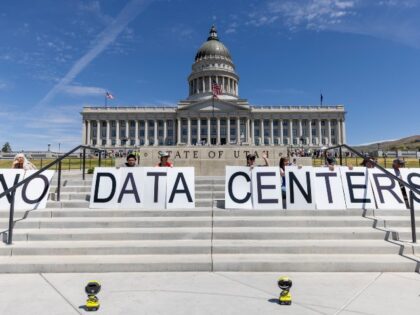
The pushback against AI data centers isn’t just about power grids or rural viewsheds—it’s a textbook case of how regulatory friction and local veto power can stall multi-billion-dollar infrastructure overnight. When nearly $130 billion in planned builds gets shelved or slowed in a single year, the message is clear: even the most capital-intensive projects can be derailed by organized opposition that understands how to weaponize zoning, environmental reviews, and public-comment theater. For the firearms community this should ring familiar; the same tactics—endless permitting loops, “community impact” lawsuits, and activist-funded studies—are routinely deployed against ranges, manufacturers, and training facilities under the banner of public safety or environmental protection.
What makes the data-center story especially instructive is the speed and scale at which capital flees hostile jurisdictions. Companies are already rerouting projects to states with streamlined approvals and predictable rules, proving that policy certainty is now a competitive advantage. Second Amendment advocates have long argued that shall-issue permitting, constitutional carry, and tort reform create exactly that kind of certainty for the gun industry; the AI example shows what happens when the opposite environment takes hold. If data-center developers can lose $130 billion in twelve months, imagine the chilling effect on smaller-scale 2A businesses that lack the lobbying muscle or relocation flexibility of hyperscale tech firms.
The deeper implication is that infrastructure fights are rarely about the stated issue—whether it’s electricity demand or “assault weapons”—and almost always about who controls the permitting spigot. Pro-2A organizations that treat land-use and administrative-law battles as second-tier issues are ceding ground that will later be used against shooting sports, self-defense training, and domestic manufacturing. The data-center opponents have demonstrated that a few well-placed lawsuits and media campaigns can neutralize enormous private investment; the gun community’s task is to ensure that the same tools cannot be turned against the constitutional right to keep and bear arms by making pro-carry and pro-industry policies the default rather than the exception.


