

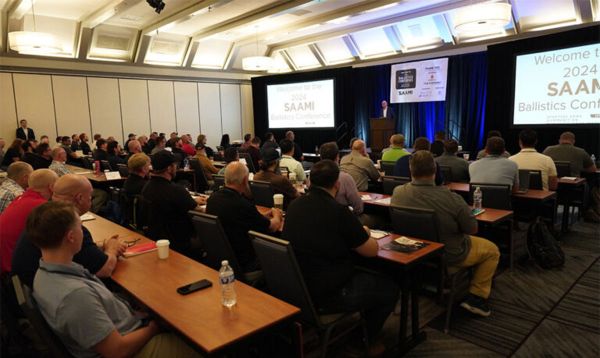
The SAAMI 2026 Ballistics Conference isn’t just another industry meet-and-greet—it’s the annual gathering where the people who actually write the rulebook on pressure, velocity, and chamber specs sit down with the folks who turn those numbers into the ammunition that millions of Americans rely on for self-defense, sport, and the preservation of liberty. When Element U.S. Space & Defense opens its labs for a tour, attendees aren’t just looking at test fixtures; they’re seeing the same high-speed instrumentation that validates the loads carried daily by concealed-carry permit holders and the same pressure curves that keep modern sporting rifles running reliably in every climate. That matters because every new cartridge, every revised pressure spec, and every safety protocol hammered out in Baltimore will eventually show up on store shelves and in the hands of law-abiding citizens who depend on consistent, safe ammunition to exercise their Second Amendment rights.
What makes this year’s deadline especially consequential is the backdrop of rapid innovation colliding with regulatory pressure. Subsonic 300 Blackout, straight-walled deer cartridges, and new precision-rifle loads are all pushing the edges of existing SAAMI drawings, while state-level magazine bans and “assault weapon” litigation keep forcing manufacturers to prove that their products meet or exceed voluntary standards that often become de-facto legal safe harbors. The seminars and product demos in September will therefore serve as both technical briefings and quiet battle briefings—places where the industry decides how to maintain performance margins that courts and legislators cannot later redefine as “defects.” For the 2A community, that means the difference between a cartridge that remains legal and affordable or one that quietly disappears from the market because a single pressure spec was allowed to drift.
Registering before the cutoff isn’t paperwork; it’s buying a seat at the table where the future of lawful firearm ownership is quietly engineered. Every hand that signs up now helps ensure that the data driving tomorrow’s ammunition is generated transparently, peer-reviewed by the people who actually shoot and sell it, and insulated from the narrative that all innovation is inherently suspect. In an era when lawsuits and legislation often move faster than legislation can react, the September gathering in Baltimore is one of the few venues where the Second Amendment still has engineers in the room—and every empty chair is an open invitation for someone else to write the specs that will govern the next generation of American firearms.


