

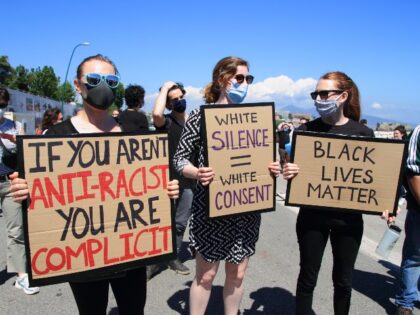
Publicis Groupe’s $2.2 billion grab for LiveRamp is more than a routine ad-tech merger; it’s the consolidation of two powerful levers—capital and code—that decide which messages reach the public and which are throttled before they ever load. The same French holding company that bank-rolled NewsGuard’s “trust ratings” is now absorbing a firm whose former product chief openly pitched ad-blocking as an “anti-racism” weapon. In practice, that means the infrastructure used to starve disfavored publishers of revenue is about to sit under the same roof as the organization already grading news outlets on a sliding scale of political hygiene. For Second Amendment creators, that’s a double choke-point: algorithmic de-boosting on one side, financial blacklisting on the other.
The timing is no accident. As courts and state legislatures push back against de-platforming and financial cancel campaigns, the institutional response has been to fuse softer “content integrity” tools with harder revenue firewalls. LiveRamp’s identity-resolution tech already lets brands micro-target—or micro-avoid—entire demographic slices; pairing it with NewsGuard’s red-yellow-green flags gives advertisers an automated way to spend around anything tagged insufficiently enlightened. Gun owners learned during the 2018–19 credit-card squeeze how quickly payment rails can be re-calibrated; now the same logic is being sold upstream to Madison Avenue as a moral good. The result is an ecosystem where lawful speech isn’t banned outright—it simply never clears the ROI threshold.
The 2A community’s counter-move has to be equally structural. Parallel payment rails, creator-owned ad networks, and state-level contracting rules that bar viewpoint discrimination are no longer fringe experiments; they’re the only durable insulation against a supply chain that now runs from Paris boardrooms to the browser extensions on American laptops. If the merger sails through, the overlap between “brand safety” scoring and “anti-racism” blacklists will tighten further, and the cost of dissent will be measured not in strikes or bans, but in six-figure ad-spend evaporation. That’s the battlefield the industry just bought a controlling stake in.


