

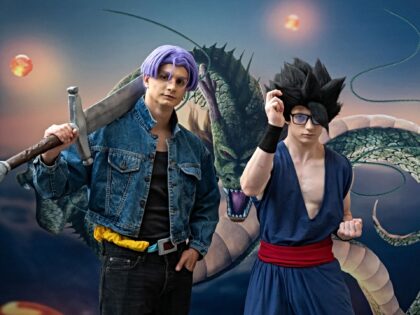
France and Saudi Arabia just inked a $7.2 billion deal to build three new theme parks outside Paris, one of them a Dragon Ball Z–branded attraction that will let fans power-up, fly, and blast their way through the Saiyan universe. On paper it’s a tourism play—France wants the cash, Saudi Arabia wants the prestige—but the optics are unmistakable: a sovereign wealth fund from a country that still executes people for apostasy is now bankrolling a cartoon franchise whose central motif is the glorification of overwhelming personal firepower. Dragon Ball Z’s entire narrative engine runs on bigger beams, stronger transformations, and the moral certainty that the hero with the most destructive ki blast wins. That message travels well in a theme-park setting, where every child can rent a plastic “Kamehameha” emitter and pretend to level a city block.
For the 2A community the story is a Rorschach test. On one hand, it’s another data point that pop-culture firepower—lasers, rail-guns, energy swords—remains commercially irresistible even in jurisdictions that treat actual firearms as toxic. France’s civilian gun laws are among Europe’s strictest, yet the same government is happy to monetize the fantasy of superhuman marksmanship. On the other hand, the project underscores how authoritarian petro-states are learning to launder their image through Western entertainment IP. If a Dragon Ball Z park can sanitize a regime’s human-rights record, it’s worth asking what other symbols of individual power—say, the AR-15—might be next on the re-branding list. The park won’t sell real rifles, but it will sell the idea that the right to keep and bear planet-busting energy is an inalienable good. That idea still resonates, even when the hardware is plastic and the bill is paid in oil dollars.


