

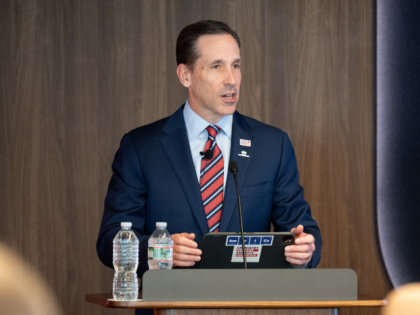
In an era where regulatory overreach has become a silent tax on American industry, Chris Jahn’s praise for the Trump administration’s deregulation push lands like a well-placed shot on a steel plate—clear, resonant, and long overdue. The American Chemistry Council’s leader isn’t just talking about easing burdens on chemical plants; he’s highlighting how every unnecessary rule stacks the deck against domestic producers, driving up costs, slowing innovation, and handing market share to foreign competitors who play by looser rules. For the firearms community, this matters because the same regulatory mindset that burdens chemical manufacturers also fuels the ATF’s ever-expanding interpretations of what constitutes a firearm, accessory, or “ghost gun.” When the administrative state shrinks in one sector, it creates precedent and political momentum to push back elsewhere—whether that’s challenging pistol-brace rules, solvent-trap guidance, or the latest attempt to redefine what makes a receiver a firearm.
The real opportunity here isn’t just cheaper feedstocks or faster permitting for new facilities; it’s the broader recognition that American manufacturing thrives when government gets out of the way. Jahn’s comments underscore how global competitiveness depends on predictable, reasonable rules rather than a constant drip of compliance costs that favor large incumbents and foreign supply chains. That same principle applies directly to the 2A space: every regulation that treats law-abiding gun owners and small manufacturers as presumptive threats erodes the industrial base that produces everything from barrels to optics. Cutting red tape in chemicals signals that the current administration understands the link between economic freedom and national strength—something the firearms community has long argued should extend to the right to keep and bear arms without a permission slip for every modification or component.
What makes this moment particularly sharp is the contrast with the regulatory expansion seen under previous administrations, where environmental, labor, and product-safety rules often served as proxies for industrial policy that punished domestic production. Jahn’s optimism reflects a strategic bet that rolling back these layers will not only revive chemical output but also reinforce the cultural and economic case for self-reliance—values that sit at the core of Second Amendment advocacy. If the administration follows through across multiple agencies, the ripple effects could reach the ATF’s rule-making process, state-level restrictions, and even international trade dynamics that affect imported firearms and parts. In short, when chemistry gets lighter regulation, the entire ecosystem of American making—including the tools that defend it—stands to benefit from the same philosophy of restrained government and empowered citizens.


