

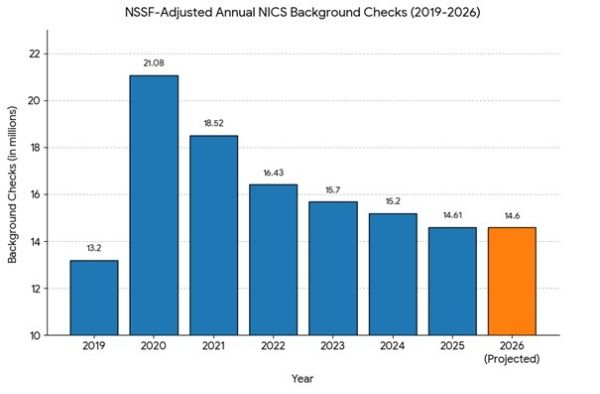
Demand for firearms and ammunition has leveled off after the pandemic-era buying frenzy, and that’s actually a sign of market health rather than weakness. The surge that began in 2020 was driven by first-time buyers, political uncertainty, and supply-chain panic; now that those pressures have eased, monthly NSSF-adjusted background-check numbers are holding steady in the mid-2-million range—roughly double pre-2020 averages. Flat demand at this elevated baseline means the industry has absorbed millions of new gun owners without the boom-and-bust volatility that historically followed election cycles, giving manufacturers room to plan production, retailers room to manage inventory, and the Second-Amendment community room to focus on training and culture rather than panic buying.
For the 2A ecosystem, this plateau is strategic breathing space. With new-shooter acquisition costs dropping and repeat business rising, gun ranges, instructors, and gunsmiths are shifting resources toward retention—concealed-carry classes, women’s shooting leagues, and youth safety programs that convert one-time purchasers into lifelong participants. Meanwhile, the lack of frenzied demand has eased pressure on the ATF’s regulatory apparatus, slowing the pace of new pistol-brace and receiver rules that thrived on shortage narratives. The industry can now invest in long-overdue modernization—direct-to-consumer e-commerce compliance systems, smart-gun R&D, and domestic primer and propellant capacity—without the distraction of overnight sell-outs.
Politically, steady rather than skyrocketing sales blunt the “arsenal accumulation” talking point that gun-control advocates wield during election seasons. When background checks remain high but flat, the data undercut claims of an ever-expanding “gun-show loophole” crisis and instead highlight a maturing market of trained, papered owners. That narrative shift matters in statehouses and courtrooms where the Bruen test is still being litigated; a calm, well-documented constituency is harder to dismiss as an emergency requiring further restrictions. In short, flat demand isn’t stagnation—it’s the Second-Amendment community consolidating its largest expansion in a generation and preparing for the next chapter from a position of strength.


