

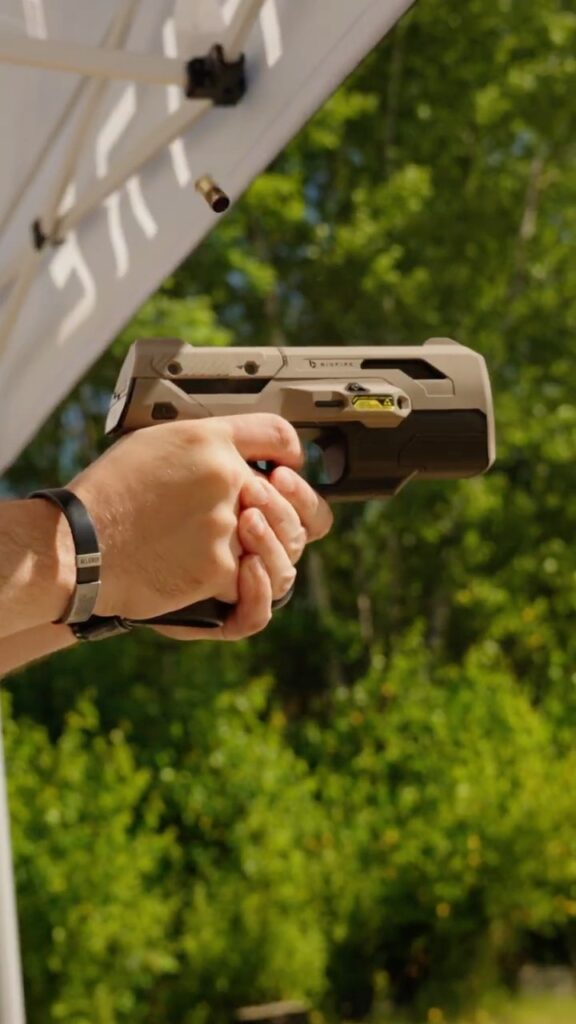
The Biofire Smart Gun’s appearance at GunCon 2026 is less a technological milestone than a carefully staged provocation aimed at the gun-owning public. Marketed as a biometric “solution” that only the registered owner can fire, the pistol is pitched to legislators and insurers as a way to reduce unauthorized use, yet its very existence hands anti-gun advocates the talking point they crave: that traditional firearms are somehow incomplete without government-approved electronics. For the 2A community the danger is not the gun itself—most owners will simply refuse to buy one—but the precedent it sets for future mandates tying carry permits, insurance discounts, or even lawful ownership to proprietary software and cloud authentication that can be disabled by remote update or court order.
Beyond the policy risk lies a practical one that rarely makes the press releases. Every added sensor, processor, and wireless chip is another potential point of failure in the one machine whose reliability must be absolute. Battery drain, firmware bugs, or an EMP pulse could turn a defensive tool into a brick at the exact moment it is needed, and unlike a simple mechanical safety there is no field-expedient workaround. The industry’s long-standing resistance to “smart” mandates is therefore not Luddism; it is recognition that any feature which can be hacked, bricked, or legislated away erodes the core promise of the Second Amendment—an arm that remains functional regardless of who controls the network.
Still, the spectacle at GunCon serves a useful purpose: it forces a clarifying debate inside the community about where innovation ends and compelled dependency begins. Supporters of the technology are free to purchase it, but the broader right to keep and bear arms must remain anchored to designs that do not require a corporate login or a firmware key to operate. If Biofire’s device gains traction only through subsidies or regulatory favoritism rather than voluntary demand, the 2A response should be straightforward—reject the subsidy, reject the mandate, and continue to defend the unencumbered firearm as the baseline for lawful self-defense.


