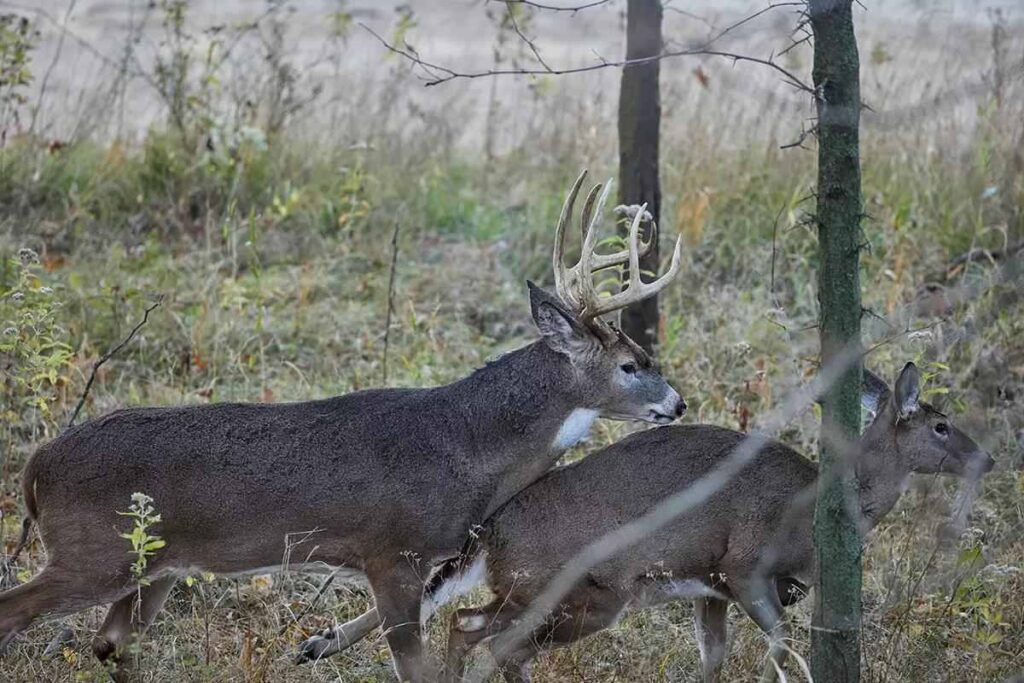
Hunters often see trail-camera activity and daylight buck movement collapse in November after weeks of chasing, even as breeding continues. That pattern is the lockdown phase, when a buck that locates a doe stays with her for the roughly 24 to 36 hours she is receptive instead of cruising funnels and scrapes. Mississippi State University research found bucks can still cover more total ground then, but much of it occurs in thick bedding cover, creek bottoms, and other secure spots rather than the travel routes hunters have been watching. Timing follows local breeding, commonly the second and third weeks of November in much of the Midwest and East, while southern peaks can be weeks or months earlier or later. Warm weather does not halt breeding, which is driven mainly by day length, and a quiet camera or stand does not prove a buck has left the property.