

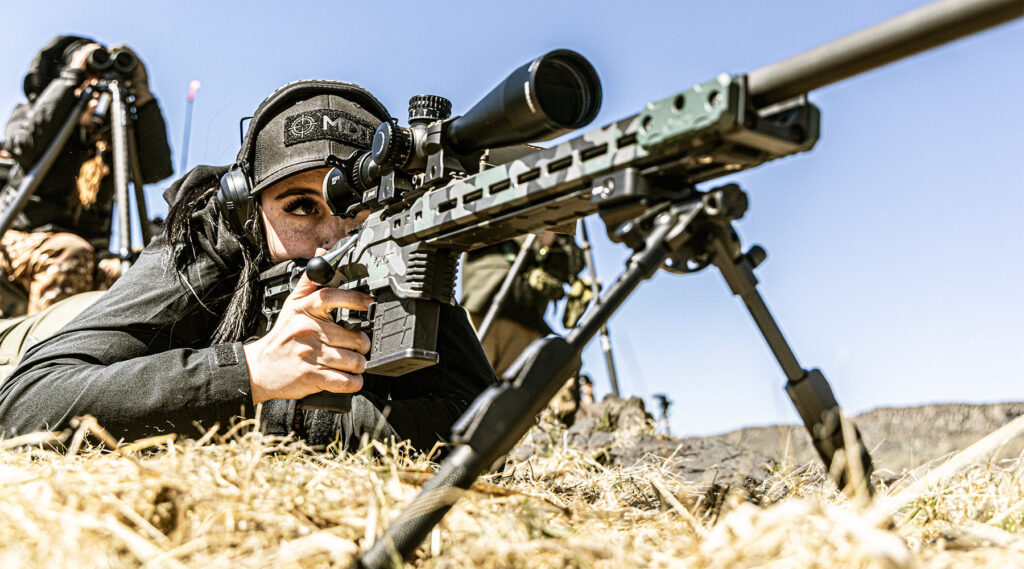
The idea that loading a bipod improves precision is one of those inherited truths that feels right until you actually measure it. Rob Orgel’s experience—from Marine infantry to private contractor to full-time instructor—shows how military doctrine often outlives its usefulness. What started as a way to control a machine gun’s recoil on a flimsy bipod became gospel for precision rifle shooters, even though the physics and the goals are completely different. When the objective shifts from “suppress the enemy” to “print the smallest group possible,” every ounce of unnecessary tension becomes a variable the rifle didn’t ask for.
The real insight here is that the rifle is already doing its job; the shooter is usually the problem. Orgel’s progression from “dig in with your toes” to “let the rifle recoil naturally” mirrors what top-level competitive shooters have quietly known for years: consistent, minimal input beats aggressive stabilization every time. The exception he carves out for barricades is telling—when the rest itself is unstable, a little forward pressure can turn two points of contact into three. But on a solid bipod, that same pressure just masks poor fundamentals and introduces vertical stringing the moment the shooter’s muscles relax between shots.
For the 2A community this matters because precision rifle culture is one of the fastest-growing segments of the shooting sports. If new shooters are being taught to fight the rifle instead of letting it work, they’re absorbing a handicap that shows up at matches, in hunting scenarios, and in any defensive situation where follow-up accuracy counts. The takeaway isn’t that bipods are bad or that tension is never useful; it’s that the technique should match the mission. When the mission is maximum accuracy, the data and the experience both point to the same conclusion: relax, stay consistent, and let the rifle do what it was built to do.


