

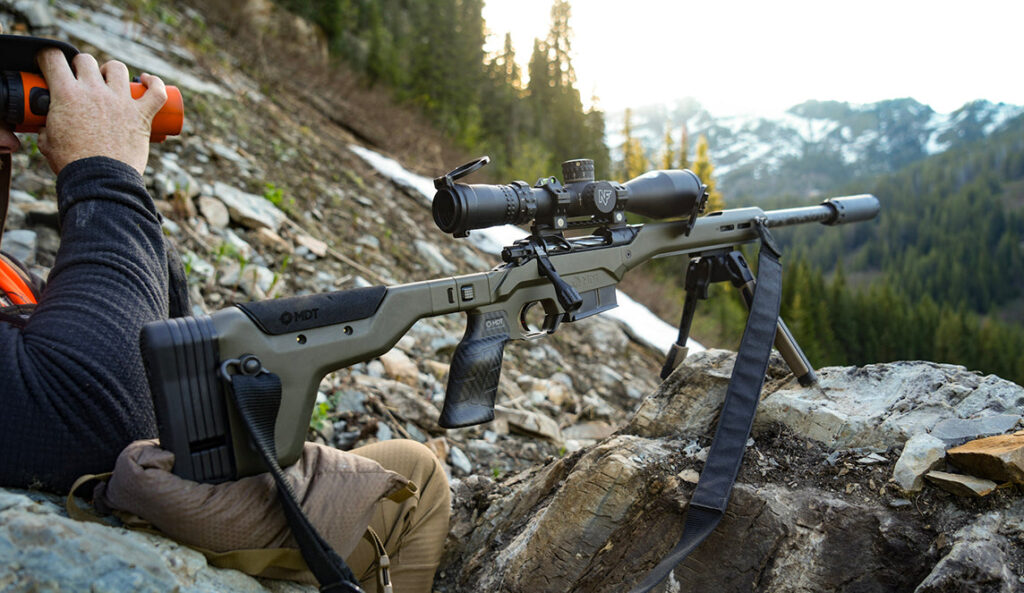
The firearms world loves chasing the next answer. Every few years, a cartridge shows up that promises flatter trajectory, better wind performance, and less recoil, all while still delivering enough punch for serious long-range work. The 25 Creedmoor is the latest flavor-of-the-month candidate, essentially a necked-down 6.5 Creedmoor that launches lighter, faster .257 caliber bullets at screaming velocities north of 3,000 fps with respectable barrel life. On paper it looks like magic: a laser beam that laughs at wind and drops like a rock only after distances most shooters will never attempt. But like every shiny new solution in the gun world, whether the 25 Creedmoor is actually worth your time, money, and reloading bench space depends on who you are and what you actually do with your rifles.
For the precision rifle crowd and long-range hunters, the appeal is obvious. The cartridge bridges the gap between the mild 6mm Creedmoor and the harder-kicking 6.5 or .308 family, giving competitors and western hunters a tool that minimizes recoil while maximizing ballistic coefficients with modern heavy-for-caliber 25-caliber projectiles. In an era where ballistic solvers, dope cards, and Kestrel readouts are common, the 25 Creedmoor’s ability to cheat the wind better than a 6.5 while staying softer on the shoulder has clear tactical and practical implications. It’s the kind of marginal gain that separates top ten from top three at a PRS match or turns a 700-yard mule deer shot from a prayer into a confident proposition. Yet for the vast majority of Second Amendment supporters who own rifles for home defense, training, or general liberty preservation, the 25 Creedmoor risks becoming another expensive solution in search of a problem. Most Americans will never shoot past 300 yards in anger or in the field. For them, the readily available, battle-proven 5.56, 7.62×51, or even the humble 6.5 Creedmoor already deliver everything needed at a fraction of the cost and logistical headache.
The real story behind cartridges like the 25 Creedmoor isn’t ballistics; it’s the endless American drive to innovate, tinker, and push equipment further. That spirit is healthy for the firearms community. It keeps manufacturers sharp, reloaders engaged, and the gun culture from stagnating. But it also feeds a consumerism trap that can distract from the foundational reasons we own firearms in the first place: the fundamental human right to self-defense and resistance to tyranny. So is the 25 Creedmoor “worth it”? For the serious long-range enthusiast chasing every decimal point of advantage, absolutely. For everyone else, it’s a fascinating case study in what’s possible when engineers refuse to accept “good enough.” The 2A community thrives when it stays curious, but it stays free when it remembers that the most important tool on the range will always be the trained citizen behind the trigger, regardless of which shiny new cartridge is trending this year.


