

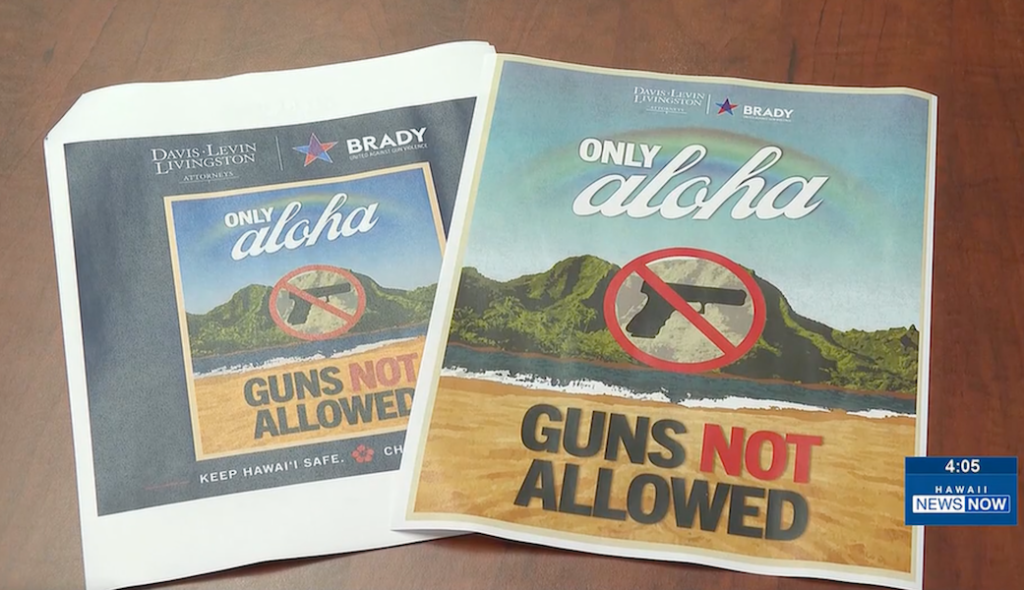
Hawaii’s gun-control crowd is pivoting from failed statewide mandates to a softer, more insidious tactic: persuading private businesses to post “no guns” signs for free. With the so-called “vampire law”—a sweeping carry restriction that courts ultimately drained of life—now dead, the Brady-backed effort by Davis Levin Livingston is essentially crowd-sourcing the old policy through property owners who may not realize the legal weight those signs carry under Hawaii’s peculiar statutes. In practice, a simple placard can convert an otherwise lawful permit holder into a trespasser, effectively recreating the very zones the legislature couldn’t impose.
The move reveals how anti-Second Amendment groups adapt when legislation collapses: they weaponize private property rights against the very people those rights are meant to protect. By offering glossy signage at no cost, Brady and its local partners lower the barrier for risk-averse shopkeepers who might otherwise weigh the deterrent value of armed customers against the remote chance of liability. The result is a patchwork of “gun-free” storefronts that collectively shrink the map of lawful carry without ever passing another bill—an end-run around both the courts and the legislature that still chills the exercise of a fundamental right.
For Hawaii’s permit holders, the lesson is clear: signage is no longer a neutral décor choice; it is now a contested front in the continuing struggle over where constitutional carry actually exists. Law-abiding citizens will need to track these new postings, engage business owners with data on defensive gun uses, and, where necessary, support legislation that clarifies or limits the legal effect of unilateral disarmament zones. Until then, every free Brady sign that goes up is a quiet reminder that the fight for the right to bear arms has simply moved from the capitol steps to the storefront window.


