

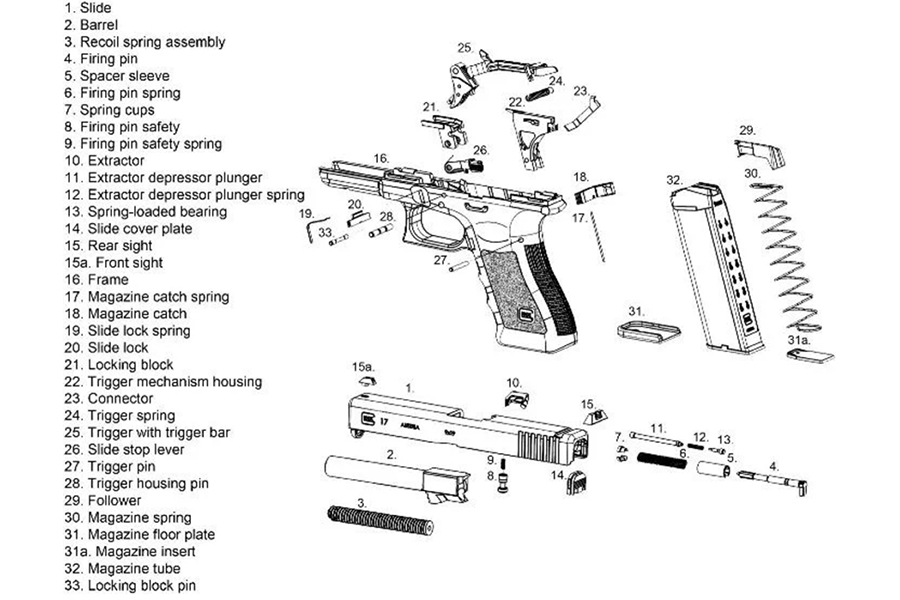
The sudden panic over “machinegun-convertible pistols” is less about a new technological threat and more about a familiar political tactic: re-labeling existing, lawfully owned firearms to manufacture urgency. What the media calls conversion devices are simply aftermarket auto-sears or Glock switches—items already banned under the National Firearms Act since 1986. The real story isn’t that millions of law-abiding owners suddenly woke up with machine guns; it’s that a tiny subset of criminals are obtaining these illegal parts on the black market while prosecutors in many blue cities treat the underlying gun charges as throwaways. When a defendant is caught with a converted Glock during a drug or violent-crime arrest, the switch often becomes just another count that gets plea-bargained away so the case can be closed quickly, leaving the streets no safer and the legal market no more restricted.
That pattern reveals a deeper failure of enforcement priorities rather than a loophole in the law. Existing federal statutes already criminalize possession of an unregistered machine gun or conversion device with penalties that can reach ten years; the problem is that those statutes are selectively applied. Jurisdictions that advertise themselves as tough on guns simultaneously release repeat offenders under “no-cash-bail” policies and decline to pursue federal referrals that would trigger serious time. The result is a two-tier system: the compliant gun owner faces ever-tightening rules and paperwork, while the career criminal who ignores every statute walks on reduced charges. For the 2A community this underscores why due-process and prosecutorial accountability matter as much as hardware; an unenforced law is simply a tool that can later be aimed at the law-abiding when political winds shift.
The larger implication is that the gun-control narrative is shifting from hardware bans to narrative control. By inventing the phrase “machinegun-convertible pistols,” activists can point to a Glock in a crime photo and imply that any semi-automatic pistol is one cheap part away from battlefield weaponry, softening public resistance to magazine bans, feature restrictions, and registration schemes. The 2A response must stay relentlessly factual: stress that the illegal devices are already felonies, highlight the jurisdictions that refuse to prosecute them, and keep reminding the public that the overwhelming majority of defensive gun uses never involve conversion devices at all. When enforcement is consistent and penalties are real, the black-market incentive shrinks; when it isn’t, no new restriction on legal owners will change outcomes on the street.


