

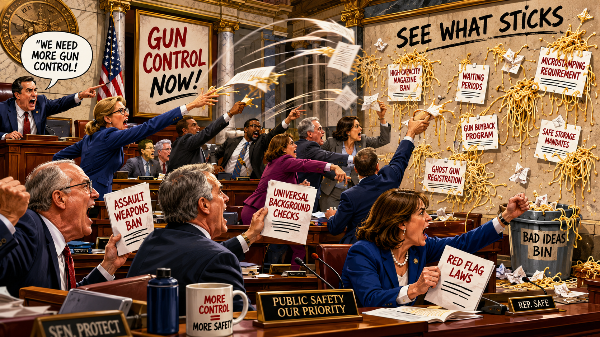
The latest push for gun control feels less like a coherent policy debate and more like a frantic scramble for whatever restriction might stick—call it the spaghetti phase, where lawmakers fling ideas at the wall hoping one lands with the public. Measures once dismissed as fringe, from red-flag expansions to magazine bans and “assault weapon” definitions that shift with each news cycle, now compete for attention without a unifying principle beyond the desire to be seen doing something. This scattershot approach reveals a movement more interested in optics than outcomes, as each proposal is quickly tested against public opinion and quietly shelved when resistance proves too costly.
For the 2A community, the pattern is both a warning and an opportunity. When legislation lacks internal logic, it becomes vulnerable to legal challenges that expose its constitutional weaknesses, and courts have already begun striking down provisions that fail even intermediate scrutiny. At the same time, the sheer volume of overlapping proposals creates a chilling effect on manufacturers, dealers, and owners who must navigate an increasingly fragmented regulatory landscape. The real danger lies not in any single bill but in the cumulative pressure that normalizes ever-tighter restrictions without ever addressing the root drivers of violence.
Yet this phase also highlights why consistent, principle-based advocacy remains essential. When opponents treat rights as negotiable based on the latest headline, the only durable defense is a clear articulation of why the Second Amendment exists in the first place—not as a policy preference but as a structural limit on government power. Communities that stay organized, track every proposal, and refuse to concede incremental ground are the ones that turn the spaghetti phase into a period of overreach that ultimately strengthens the case for restoring a robust right to keep and bear arms.


