

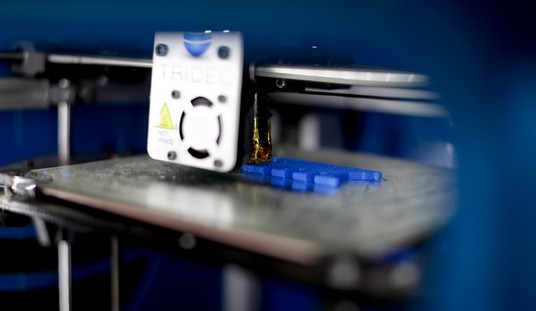
The tech world’s innovation engines are revving up with alarm bells over draconian 3D printer restrictions, and for good reason—these aren’t just bureaucratic speed bumps; they’re chokeholds on the future of manufacturing. As the source text highlights, voices from coders, makers, and hardware hackers are rising against laws clamping down on consumer-grade printers, citing stifled creativity and economic fallout. Picture this: a garage tinkerer prototyping a custom drone part or a small business churning out bespoke tools, suddenly halted by regs demanding licenses for filament extruders that rival the complexity of a coffee maker. This isn’t hyperbole; we’ve seen precedents in places like the EU’s proposed printer registration schemes and U.S. state-level bills echoing ATF overreach on ghost guns, where 3D printing gets lumped in as a boogeyman for unregulated fabrication.
For the 2A community, this hits like a magazine ban on steroids—3D printing democratizes production, turning abstract blueprints into tangible liberty tools overnight. Remember the Defense Distributed saga? Cody Wilson’s Liberator pistol file download in 2013 proved that information wants to be free, and printers make it physical. Restrictions here don’t just crimp hobbyists; they foreshadow a world where only state-approved foundries (read: government cronies) control the means of defense production. Implications? Skyrocketing black-market printers, underground file-sharing networks exploding like BitTorrent did for music, and a tech-2A alliance forging stronger than ever. Lawmakers pushing this ignore how prohibition breeds ingenuity—think Prohibition-era home stills, but for polymer lowers. The real threat isn’t a kid printing a paperweight; it’s eroded self-reliance in an era of supply chain fragility.
Bottom line: if the tech community doesn’t push back hard, we’re staring down a maker movement in irons, with 2A rights collateral damage. Rally the FabLabs, share those open-source repos, and vote with your wallet for printer-friendly pols. Innovation isn’t a privilege—it’s the spark of sovereignty. Stay vigilant, print on.


