

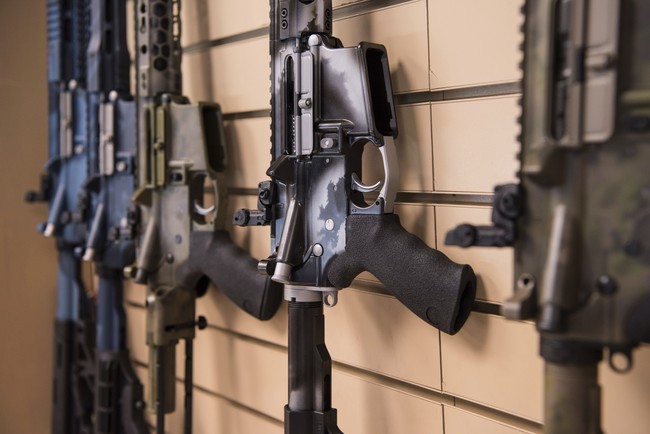
Rhode Island and Virginia just flipped the switch on their so-called “assault-weapon” bans, and the timing couldn’t be more instructive for anyone who still believes the Second Amendment is a living guarantee rather than a slowly eroding permission slip. Both states are leaning on the familiar claim that banning features like pistol grips, folding stocks, and threaded barrels will somehow make mass shootings disappear, yet the data from states that passed similar measures years ago shows no statistically meaningful drop in gun crime—only a growing list of suddenly non-compliant owners who must now choose between costly compliance, surrender, or quiet civil disobedience. The real message isn’t about public safety; it’s a calculated test of how much further the political class can push before law-abiding citizens simply refuse to play along.
For the 2A community the lesson is immediate and practical: model legislation is already circulating in other blue legislatures, and the same vague, feature-based definitions that turned millions of previously legal rifles into contraband overnight will be copied verbatim if they succeed here. That means the window for preemptive legal challenges, state-level sanctuary resolutions, and organized civil-resistance campaigns is measured in weeks, not years. More importantly, these bans expose the strategic endgame—once a firearm is reclassified as an “assault weapon,” due-process protections shrink, red-flag laws become easier to apply, and future magazine or ammunition restrictions slide through with less political friction.
The deeper implication is cultural. Every time a state treats the most common, mechanically ordinary semi-automatic rifle as a uniquely dangerous outlier, it normalizes the idea that constitutional rights are subject to whatever public-safety panic is fashionable this legislative session. Rhode Island and Virginia are therefore less about two new statutes and more about a live demonstration of how quickly paper rights can be converted into regulatory crimes; the 2A community’s response will either slow that conversion or accelerate it nationwide.


