

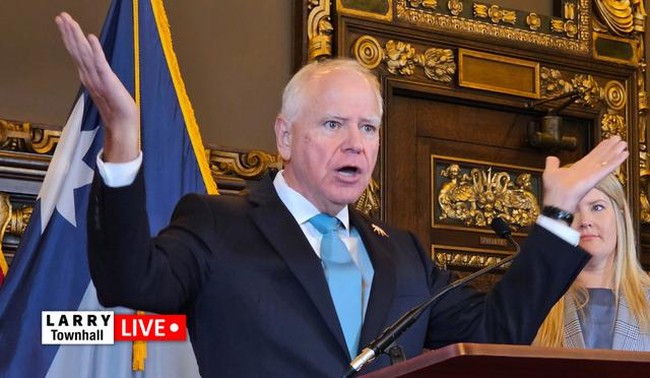
Marco Rubio’s swift intervention to block Tim Walz’s attempt to pardon a convicted felon who illegally possessed firearms sends a clear message that governors cannot simply erase federal gun violations with a stroke of a pen. The Minnesota governor’s maneuver was widely viewed as an end-run around the Lautenberg Amendment and other federal prohibitions that bar domestic-violence offenders from owning guns, yet Rubio’s objection on the Senate floor forced the issue back into the light where it belongs. By spotlighting the constitutional limits on state clemency power when federal statutes are involved, Rubio underscored a principle the 2A community has long championed: the Second Amendment is not a bargaining chip state executives can trade away to score political points with anti-gun constituencies.
The moment Gavin Newsom appeared momentarily speechless when asked about the same issue was more than a viral clip; it revealed the discomfort many blue-state leaders feel when forced to defend policies that treat gun rights as revocable privileges rather than constitutionally protected liberties. Newsom’s hesitation came as California continues to push magazine bans, “assault weapon” restrictions, and red-flag laws that already strain the edges of Bruen’s text-and-history test. Rubio’s stand, by contrast, reinforces that federalism has limits—states may experiment with criminal justice reforms, but they cannot nullify the background-check regime or the disqualifying criteria Congress enacted under its commerce-clause authority.
For law-abiding gun owners the episode is a timely reminder that vigilance must extend beyond the legislative chamber to the pardon power itself. If governors can quietly restore firearm rights to prohibited persons, every successful prosecution under 18 U.S.C. § 922(g) risks becoming advisory rather than binding. Rubio’s objection buys time for courts and Congress to clarify the boundaries, but the underlying pressure from sanctuary-style non-enforcement policies will not disappear. The 2A community should treat this episode as both a defensive win and a warning: the next battle over who ultimately decides who may keep and bear arms may be fought not in statute books, but in the quiet offices where clemency petitions are signed.


