

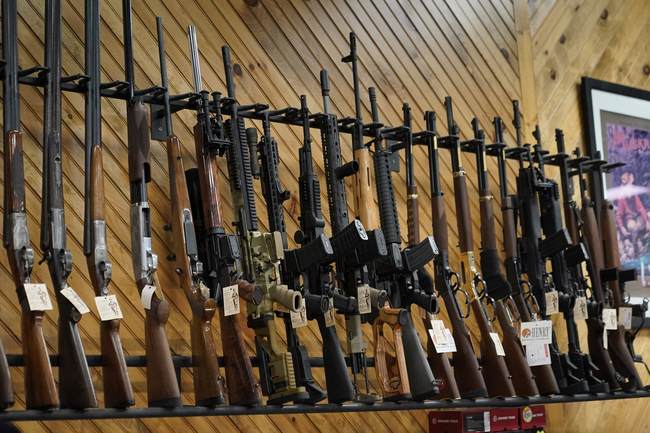
The Federal Trade Commission’s top official just lobbed a political grenade at Virginia State Police, claiming they’re deliberately dragging their feet on background checks right before a sweeping gun ban is set to take effect. On its face, the accusation sounds like bureaucratic finger-pointing, but the timing is impossible to ignore: if checks are being slowed on purpose, it effectively creates a de-facto waiting period that could push lawful purchases past the ban’s deadline, leaving Virginians with fewer options and the state with more leverage. For the 2A community, this isn’t just red tape—it’s a textbook example of how administrative friction can be weaponized to achieve policy outcomes that legislators couldn’t secure outright.
What makes the claim especially combustible is the broader pattern it fits. Virginia has already seen multiple attempts to restrict carry rights, magazine capacity, and private sales; each time, the state police have been handed new compliance burdens without corresponding increases in staffing or technology. When an agency suddenly “can’t keep up” right before a prohibition kicks in, it raises the obvious question of whether the slowdown is incompetence or quiet cooperation with the political class. Gun owners who have watched similar games play out in other states recognize the tactic: starve the NICS pipeline, then point to the resulting backlog as proof that “the system is overwhelmed” and therefore more restrictions are needed.
The real takeaway for Second Amendment advocates is that enforcement mechanisms matter as much as the laws themselves. If background-check delays can be dialed up or down to shape who gets to exercise a constitutional right before a cutoff date, then the right itself becomes contingent on bureaucratic goodwill rather than being treated as a fundamental liberty. That’s why this story is resonating far beyond Richmond: it underscores the need for hard statutory timelines, independent audits of state police performance, and, ultimately, a recognition that any process that can be gamed to disarm citizens is itself a threat to the right to keep and bear arms.


