

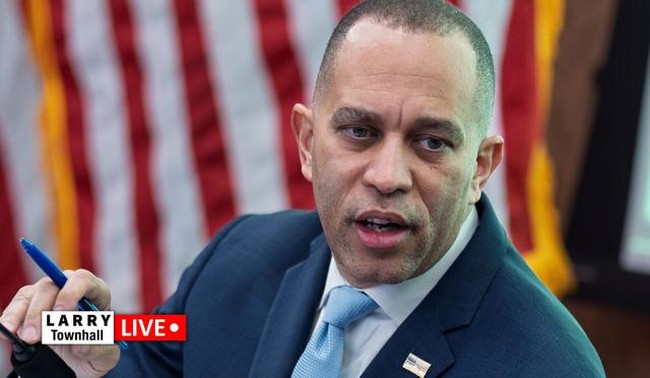
Hakeem Jeffries has spent years positioning himself as the Democrats’ smooth-talking firewall against any meaningful expansion of gun rights, but recent polling and internal party fractures suggest his grip is slipping fast. While Jeffries still clings to the tired talking points of “universal background checks” and “assault-weapon bans,” rank-and-file Democrats in swing districts are quietly signaling they can no longer afford to run on confiscation rhetoric when voters are staring down record violent crime in Democrat-run cities and watching their self-defense rights erode. The 2A community should read this not as a victory lap, but as confirmation that the old coastal playbook—demonize owners, flood the zone with restrictions, then dare Republicans to defend the Second Amendment—is losing its electoral punch.
What makes Jeffries’ apparent fade especially telling is how little daylight now exists between his rhetoric and the Biden-Harris era’s most aggressive proposals: red-flag laws that bypass due process, pistol-brace rules that retroactively criminalize millions of owners, and the steady push to nationalize California-style restrictions. Those policies have produced measurable blowback; even some urban Democrats are now hedging on magazine bans and permit-to-purchase schemes after seeing Black and Hispanic voters in their own districts prioritize personal safety over symbolic gun control. For pro-2A advocates, the takeaway is strategic: keep hammering the data on defensive gun uses, emphasize shall-issue carry victories in the courts, and refuse to let Jeffries or his successors reframe the debate as “commonsense” versus “extremism” when the real extremism is treating a constitutional right like a legislative bargaining chip.
The larger implication is that the gun-control coalition is fracturing along the same lines that have already reshaped the electoral map—suburban parents worried about crime, rural and working-class voters tired of being lectured, and a growing cohort of minority gun owners who reject the narrative that self-defense is a privilege reserved for the well-connected. Jeffries may still hold the minority-leader gavel for now, but if the party continues to bleed support in districts where the Second Amendment is not a punchline, the next Democratic leader will have to decide whether to keep doubling down on Jeffries-style obstruction or finally acknowledge that millions of Americans view the right to keep and bear arms as non-negotiable.


