

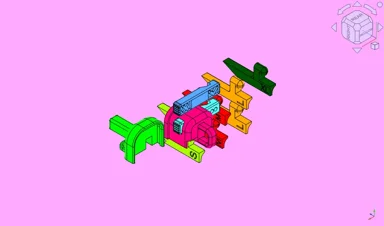
The Gobstopper project represents a fascinating evolution in the gun-control arms race, where the very tools of restriction are being turned against their creators through the power of distributed manufacturing. What makes this development particularly noteworthy isn’t just the technical achievement of creating a functional firearm component through 3D printing—it’s the philosophical statement embedded in its very existence. By naming their creation after the seemingly indestructible candy from Willy Wonka, the developers are making a pointed commentary about the futility of attempting to regulate what cannot be effectively controlled in an age of democratized manufacturing technology.
The implications for the 2A community extend far beyond the technical specifications of this particular device. Gobstopper demonstrates how the traditional regulatory framework—built around controlling access to finished firearms through FFL dealers and background checks—becomes increasingly obsolete when the means of production themselves are distributed among millions of individuals. This isn’t merely about circumventing existing laws; it’s about fundamentally altering the power dynamic between citizens and government by removing the state’s monopoly on the legitimate means of force production. The project’s open-source nature and LBRY distribution further underscore this shift toward decentralized resistance against centralized control.
What’s particularly clever about this approach is how it forces gun control advocates into an increasingly untenable position: either acknowledge that their regulatory goals are technically impossible to achieve, or advocate for measures so draconian they would criminalize basic computer files and 3D printing technology itself. The 2A community would do well to recognize Gobstopper not as an end in itself, but as a proof of concept that the future of firearms regulation may ultimately be decided not in legislative chambers, but in workshops and makerspaces across the country where individuals exercise their fundamental right to keep and bear arms through the most direct means possible.


