

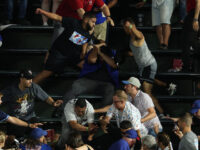
The latest melee between Cubs and White Sox supporters at Wrigley Field is more than another chapter in Chicago’s storied baseball rivalry; it’s a textbook case of how quickly a crowd can turn into a liability when the only people legally allowed to carry are the ones wearing badges. In a city that still clings to some of the nation’s most restrictive carry laws, the stands were effectively a “gun-free zone” for everyone except off-duty officers—and the footage shows how little that restriction deterred the combatants swinging aluminum chairs. For law-abiding Illinois residents who have jumped through every hoop to obtain a concealed-carry license, the takeaway is blunt: when seconds count, the cavalry is still minutes away, and the legal system offers no prize for being the only person in the section who followed the rules.
What makes the incident especially relevant to the 2A community is the political backdrop. Springfield just finished another session in which “sensitive location” carve-outs and magazine restrictions were floated as public-safety measures, yet the same legislators remain conspicuously silent when their own constituents are left defenseless in the very venues they regulate. The data from shall-issue states shows that permit holders intervene in violent encounters at a rate far higher than police are able to, but Illinois’ patchwork of prohibited places keeps that deterrent effect out of ballparks, buses, and bars. Until those arbitrary lines are erased, every crosstown brawl, concert stampede, or late-night CTA incident will replay the same lesson: a law that disarms the lawful doesn’t disarm the lawless—it simply advertises the absence of resistance.
The broader implication is cultural as much as legal. When sports franchises and municipal codes treat self-defense as an inherent public menace, they reinforce the narrative that only the government can be trusted with force. The stands-clearing brawl should serve as exhibit A in the next Springfield hearing: an environment where law-abiding fans were reduced to improvised weapons and frantic 911 calls while policy-makers congratulated themselves on another successful gun-control session. The Second Amendment was never about the right to hunt or sport-shoot; it was about ensuring that free people are never left with nothing but hope when trouble walks into the cheap seats.


